
The Hook
Choosing among Chinese 3D printer suppliers is difficult because “best” depends on the intended application, production scale, materials, technical support, and whether the buyer needs equipment, a manufacturing service, or an industry connection. Public information also varies widely: some companies publish detailed machine and application information, while others emphasize custom production or professional networks. This comparison reviews three options using information available from their official websites and supplied company research. It does not treat marketing language as independent performance testing, and no unsupported claims about print speed, accuracy, pricing, or reliability are made. The result is a practical shortlist covering an additive-manufacturing industry platform, a custom manufacturing provider, and a specialist metal additive-manufacturing company.
Full List of Top 3 Brands
- TCT Asia
- Anebon
- 3D FastForm
Comparison Table
| Brand | Key Products | Key Features | Best For |
|---|---|---|---|
| TCT Asia | Additive-manufacturing exhibition and industry platform | Industry networking, technology discovery, supplier comparison, and application-focused exposure | Professionals evaluating technologies, suppliers, and additive-manufacturing developments |
| Anebon | Custom CNC machining, milling, turning, EDM, surface grinding, sheet-metal fabrication, and online 3D printing services | Customer-specific production, prototyping, engineering support, and stated ISO 9001:2015 certification | Businesses needing custom prototypes, precision parts, or combined manufacturing support |
| 3D FastForm | FF-M140C SLM printer and other metal additive-manufacturing solutions | Dental metal printing, professional application solutions, CE-certified equipment, and international distribution | Dental laboratories and industrial users exploring metal additive manufacturing |
Detailed Reviews
1. TCT Asia
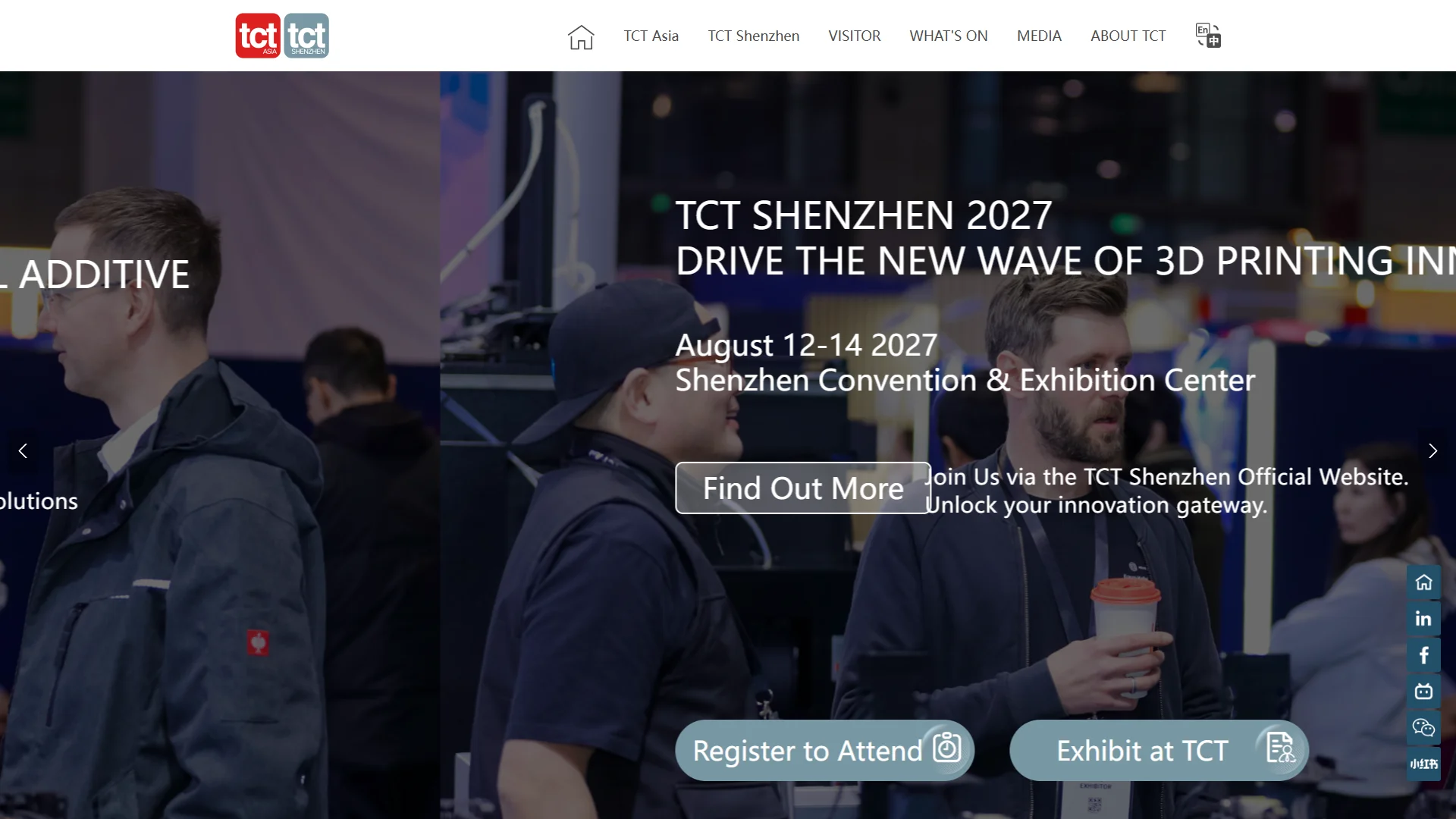
Overview: TCT Asia is positioned as an additive-manufacturing and 3D-printing industry platform rather than as a single printer manufacturer. Its official website is the primary reference for the event and its industry activities. For buyers, this distinction matters: the value is in discovering technologies, comparing suppliers, examining application trends, and connecting with companies across the additive-manufacturing ecosystem. It can therefore be useful at the early and middle stages of procurement, when a team is defining requirements or building a supplier shortlist.

TCT Asia is particularly relevant to organizations that need a broad view of the market. A conventional product page usually describes one machine, but an industry platform can help visitors compare different printing approaches, materials, workflows, and application areas in one place. Buyers can use that exposure to clarify whether they need polymer printing, metal additive manufacturing, production services, prototyping, post-processing, or software and workflow support. Specific machine capabilities, prices, tolerances, and delivery terms still need to be verified directly with the individual supplier.
Products and Industry Scope
The supplied information identifies TCT Asia with the additive-manufacturing and 3D-printing sector. Accordingly, its practical “product” is the professional industry platform: a venue and information channel for technology providers, equipment manufacturers, service bureaus, material companies, software businesses, and industrial users. The platform is relevant to sectors where 3D printing is evaluated for prototyping, tooling, production parts, medical applications, aerospace, automotive, electronics, and other engineering workflows. The exact exhibitors, event programs, and available technologies can change by edition, so current details should be checked on the official website.
Pros / Key Features
- Provides a broad way to research additive-manufacturing suppliers instead of assessing one machine in isolation.
- Supports direct comparison of equipment categories, application approaches, and production workflows.
- Useful for identifying manufacturers and service providers that may not appear in a general consumer-printer search.
- Can help procurement teams frame technical questions before requesting quotations or demonstrations.
- Offers value for professionals tracking developments in industrial 3D printing and related manufacturing services.
Use Cases / Best For
TCT Asia is best suited to procurement managers, engineers, product developers, investors, distributors, and manufacturing companies conducting market research or supplier discovery. It is also appropriate for teams comparing several possible routes to production. A visitor seeking one ready-to-buy desktop printer may find a specialist retailer more direct, while a company assessing industrial equipment, contract manufacturing, or a complete production workflow can benefit from the wider ecosystem perspective.
Important Evaluation Note
TCT Asia should not be evaluated using the same criteria as a printer OEM. It is not presented here as a machine manufacturer, and the official platform should not be assumed to guarantee the specifications or service quality of every participating company. Buyers should independently verify machine datasheets, material compatibility, certification, installation requirements, after-sales coverage, sample parts, and total operating costs with the selected supplier.
2. Anebon
Overview: Anebon is presented in the supplied company research as a China-based on-demand manufacturing provider focused primarily on custom precision parts. Its capabilities include CNC milling and turning, EDM, surface grinding, sheet-metal fabrication, rapid prototyping, and an online 3D-printing service. This makes Anebon more accurately described as a broader manufacturing partner with 3D-printing capability, rather than a dedicated catalog printer manufacturer.
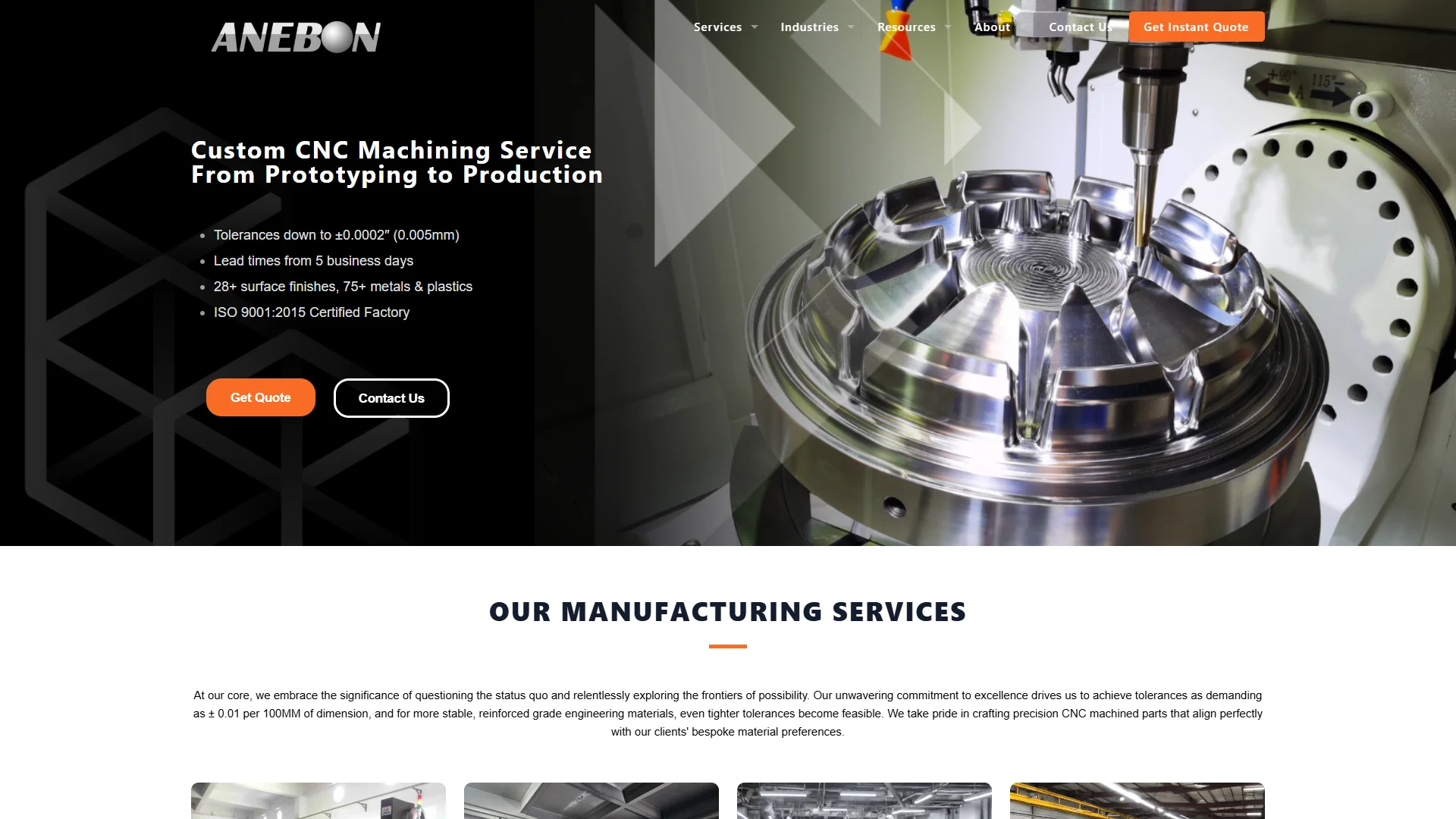
The company states that it uses advanced machinery and skilled technicians to manufacture parts according to customer specifications. Its research dossier also states that the company supports simple and complex prototypes, end-use components, and production projects. It reports tolerances as demanding as ±0.01 per 100 mm for certain work and states that tighter tolerances may be feasible for more stable, reinforced engineering materials. These claims should be confirmed against a project-specific quotation, drawing review, and inspection documentation.
Products, Materials, and Services
Anebon’s listed services include custom CNC milling and turning, EDM, surface grinding, sheet-metal fabrication, rapid tooling, and online 3D printing. The supplied research describes the online 3D-printing service as using six 3D-printing technologies to produce plastic, metal, and elastomeric products. The dossier does not provide a complete machine list or a full material catalog, so buyers should request the current technology, material, size, finish, and inspection options for the specific part.
Pros / Key Features
- Combines additive and subtractive manufacturing services in one supplier relationship.
- Supports customer-designed prototypes, precision parts, and production components.
- Lists milling, turning, EDM, surface grinding, and sheet-metal fabrication capabilities.
- States that engineering teams can help address design issues and optimize production quality and cost-effectiveness.
- Reports ISO 9001:2015 certification in the supplied company research.
Use Cases / Best For
Anebon is best for businesses that need custom components rather than a standalone 3D printer purchase. Typical projects may include prototypes, rapid tooling, CNC-machined parts, sheet-metal parts, and production components for sectors such as automotive, aerospace, and electronics. It may also suit buyers who want to move from a printed prototype to machined or otherwise finished production parts through one manufacturing partner. Since wholesale terms, delivery performance, and a complete regional service structure are not clearly established in the supplied research, those points should be confirmed before ordering.
3. 3D FastForm
Overview: 3D FastForm is described in the supplied research as a specialist in metal additive-manufacturing equipment and application solutions. Its positioning includes the FF-M140C 3D SLM printer, described as a dental metal printer, and solutions for aerospace, high-performance industrial manufacturing, mold manufacturing, and precision medicine. The company’s materials also reference an AiForm-G1 liquid-cooling green-laser metal 3D printer presented at TCT Asia 2026.
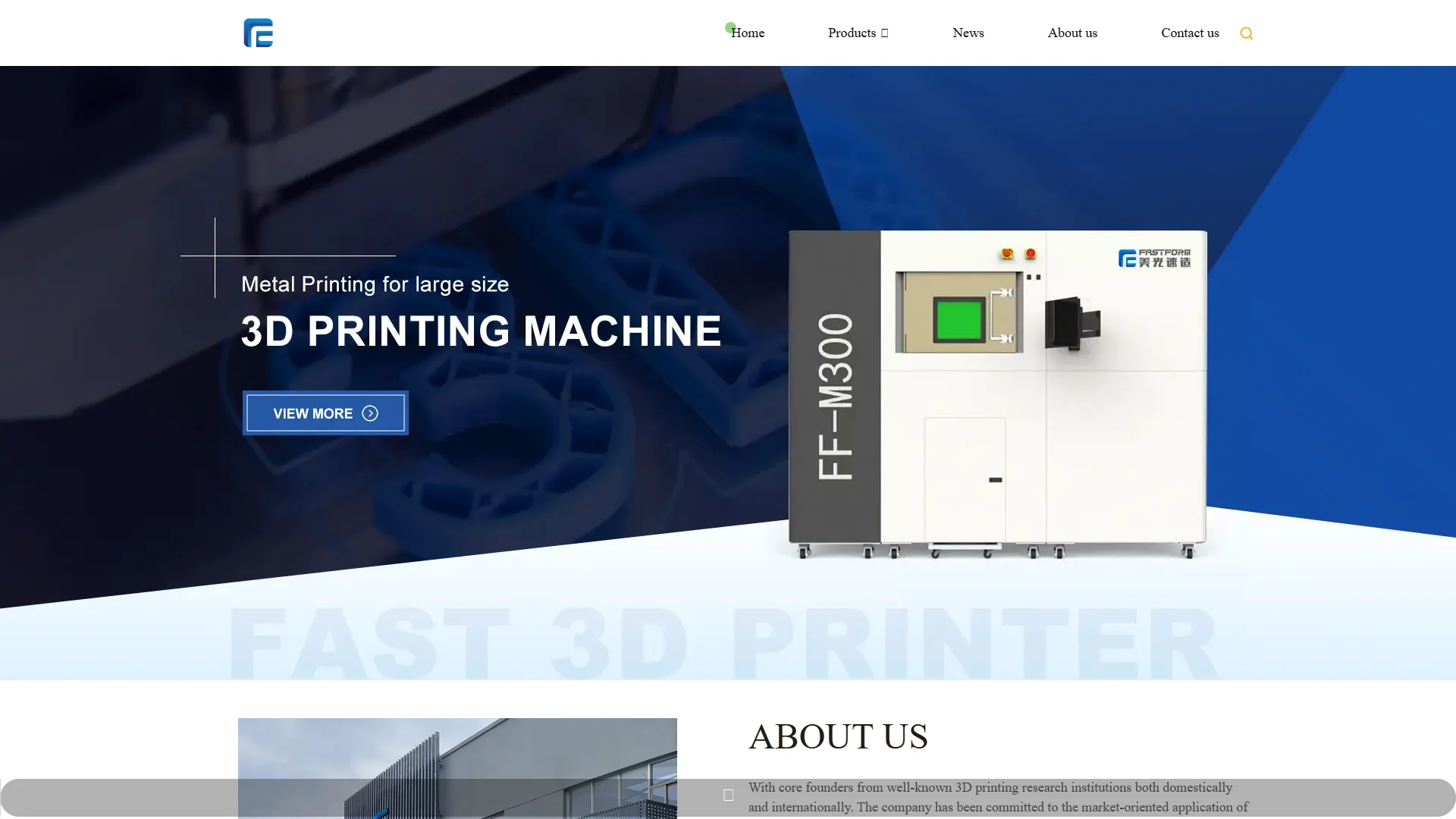
The available research states that the equipment has completed CE certification and is exported to more than 50 countries and regions, including Europe, America, Japan, South Korea, and Southeast Asia. These statements indicate an international market orientation, but buyers should request current certificates, machine-specific declarations, local support details, and applicable installation requirements before procurement.
Products, Materials, and Applications
The FF-M140C is associated with selective laser melting and dental metal production. The supplied research also refers to a small SLM all-in-one desktop dental metal 3D printer. Separately, the AiForm-G1 is described as a liquid-cooling green-laser metal printer with a stated 0.1 mm reference in the source material. Because the available dossier does not provide a complete list of supported alloys, build volume, layer-height range, laser power, or validated dental workflows, those technical details should be obtained from the current official product documentation.
Pros / Key Features
- Focuses on metal additive manufacturing rather than general-purpose consumer printing.
- Addresses dental applications as well as aerospace, industrial manufacturing, molds, and precision medicine.
- Offers the FF-M140C SLM printer for dental metal additive manufacturing.
- Research materials state CE certification for the equipment.
- Reports exports to more than 50 countries and regions.
Use Cases / Best For
3D FastForm is best suited to dental laboratories, medical-production users, and industrial organizations evaluating metal SLM equipment. It may be relevant where the buyer needs a dedicated metal-printing workflow instead of polymer prototyping. Dental users should assess validated materials, software compatibility, post-processing, powder handling, operator training, and regulatory requirements. Industrial users should additionally compare build capacity, throughput, alloy support, quality assurance, and local service arrangements.
How to Choose Among Chinese 3D Printer Suppliers
- Define the procurement type. Decide whether the requirement is a printer purchase, an outsourced manufacturing service, or supplier and technology research. TCT Asia, Anebon, and 3D FastForm address different points in that decision.
- Match the process to the part. Confirm whether the project requires polymer printing, metal SLM, CNC machining, sheet metal, or a combination of processes.
- Check materials and validation. Request an up-to-date material list, technical data sheets, recommended parameters, and evidence that the material-process combination is suitable for the intended application.
- Review dimensional and surface requirements. Compare build volume, layer height, stated tolerances, surface finish, post-processing, and inspection methods. Do not rely on a general accuracy claim without a part-specific discussion.
- Assess quality systems and certification. Verify relevant certificates, calibration practices, inspection reports, traceability, and any sector-specific compliance requirements.
- Evaluate support and total cost. Include installation, training, software, consumables, powder or resin handling, maintenance, spare parts, shipping, taxes, and after-sales response in the commercial comparison.
- Request a sample or pilot project. A test part made from the buyer’s geometry and material is more informative than a generic demonstration model.
- Clarify delivery and communication. Confirm lead times, export documentation, warranty terms, language support, replacement-part availability, and escalation procedures in writing.
Final Verdict
There is no single best choice for every buyer among these three Chinese 3D printer suppliers. TCT Asia is the strongest option for market exploration, supplier discovery, and understanding the broader additive-manufacturing ecosystem. Anebon is better aligned with custom parts, rapid prototyping, and projects that may combine 3D printing with CNC machining and other manufacturing processes. 3D FastForm is the most specialized option for organizations evaluating metal SLM equipment, particularly in dental and industrial applications. The final selection should depend on verified technical specifications, application evidence, certification, support coverage, and total project cost rather than brand positioning alone.
FAQs
1. Are all three companies manufacturers of standalone 3D printers?
No. The available information positions TCT Asia as an additive-manufacturing industry platform, Anebon as a custom manufacturing provider with online 3D-printing and CNC services, and 3D FastForm as a metal additive-manufacturing equipment specialist.
2. Which option is most relevant to dental metal printing?
3D FastForm is the most directly relevant because the supplied research identifies its FF-M140C as a dental metal SLM printer and also references a small desktop dental metal printer. Buyers should still verify alloys, workflow validation, certification, and local support.
3. What should a buyer request before placing an order?
The buyer should request a current technical datasheet, material and process information, sample-part evidence, quotation, delivery terms, warranty details, certification documents, installation requirements, training provisions, and after-sales support terms.