
The Hook
Personalized learning paths are intended to match instruction with a learner’s needs, goals, pace, or interests. Choosing the best option is difficult because the category includes very different models: AI-driven adaptive platforms, tutor-supported academic programs, and customized STEM learning environments. A service may be strong for one learner but unsuitable for another depending on the desired subject, level of human support, delivery format, and available evidence about its offerings. The three options below were examined using information published by the organizations and the supplied research records. The comparison focuses on how clearly each provider describes personalization, delivery, learning resources, and the audiences or settings it serves.
Full List of Top 3 Brands
- Squirrel Ai
- C2 Education
- SmartLab Learning
Comparison Table
| Brand | Key Products | Key Features | Best For |
|---|---|---|---|
| Squirrel Ai | AI-powered adaptive learning and personalized education solutions | Personalized, technology-supported learning paths designed to adapt to learner needs | Learners and education providers seeking an adaptive digital learning model |
| C2 Education | Personalized academic and test-preparation programs | Face-to-face personalized programs; in-person, online, or hybrid service options | Students seeking individualized academic or test-score support |
| SmartLab Learning | Customized STEM environments, SmartLab Studio, and career-connected project-based curriculum | STEM applications, production and broadcast resources, partnerships, and funding support | Schools and communities building hands-on, career-connected STEM experiences |
Detailed Reviews
1. Squirrel Ai
Overview: Squirrel Ai is positioned around artificial-intelligence-supported adaptive learning. Its official website presents personalized education as the central focus, making it the clearest match in this group for learners looking specifically for digital personalized learning paths. The model is intended to use technology to tailor learning experiences rather than offer one identical sequence to every student. The available public information supports describing Squirrel Ai as an adaptive-learning provider; specific pricing, service regions, curriculum coverage, and implementation arrangements should be confirmed directly with the company.

Products and learning model: The principal offering is an AI-powered personalized learning approach. In practical terms, this type of model can organize instruction around an individual learner’s progress and needs, but the exact assessment methods, subject availability, integrations, and course structure vary by implementation. The official company source should be consulted for current product specifications. Unlike a conventional tutoring center, the defining emphasis is the adaptive technology layer and its role in shaping the learning sequence.
Market and business scope: Squirrel Ai’s public positioning centers on personalized education and adaptive learning technology. The supplied information does not establish a complete list of customer segments, commercial pricing models, delivery regions, or institutional partnerships. Accordingly, these details should not be assumed when comparing providers. Schools, education organizations, and families evaluating the platform should request information about onboarding, teacher involvement, data handling, technical requirements, and support.
Pros / Key Features
- Strongest direct alignment with personalized and adaptive learning paths in this comparison.
- Uses an AI-centered model rather than relying only on a fixed class sequence.
- Potentially suitable for learners who benefit from technology-guided pacing and targeted practice.
- Its focus can support education providers seeking a scalable personalization layer.
Use Cases / Best For
Squirrel Ai is best suited to learners, families, and education providers looking for a technology-led approach to individualized instruction. It is particularly relevant when the main requirement is an adaptive digital pathway rather than a primarily face-to-face tutoring relationship or a physical STEM lab. Before selecting it, users should verify the subjects, age groups, language options, human support, reporting tools, and availability offered in their market.
2. C2 Education
Overview: C2 Education traces its history to a Harvard University dorm room, where David Kim and Jim Narangajavana founded the organization. According to the supplied company information, it has grown since 1997 to more than 135 centers in 15 states and Canada. C2 describes its mission through the idea that its approach should improve students’ education. Its published positioning emphasizes personalized programs designed to help students improve test scores or raise grade-point averages.
Products and learning model: The available research describes personalized academic services rather than a named adaptive software product. C2 states that its services are available in person, online, or in a hybrid format. The supplied records do not specify a complete product catalog, instructional materials, curriculum architecture, or proprietary technology, so those characteristics should be confirmed with a local center or the company.
Pros / Key Features
- Personalized programs are explicitly associated with test-score and GPA improvement.
- Offers in-person, online, and hybrid service formats.
- Has a documented history beginning in a Harvard University dorm room and a network of more than 135 centers according to the supplied company information.
- Combines individualized support with a service model that can accommodate different delivery preferences.
Use Cases / Best For
C2 Education is best for students and families who want personalized academic or test-related support with the option of face-to-face interaction. It may be a practical fit for users who value tutor involvement and flexible delivery more than a fully automated adaptive platform. Prospective customers should ask about the specific subjects, instructor qualifications, assessment process, program length, pricing, and availability at the selected center.
3. SmartLab Learning
Overview: SmartLab Learning focuses on customized STEM environments rather than presenting itself primarily as an individual AI tutoring platform. Its materials describe environments designed to affect the learning experience, along with career-connected project-based learning, integrated STEM applications, and a Pathfinder program for grades 6–8. The available research does not provide a confirmed founding date, headquarters, or broad customer profile.
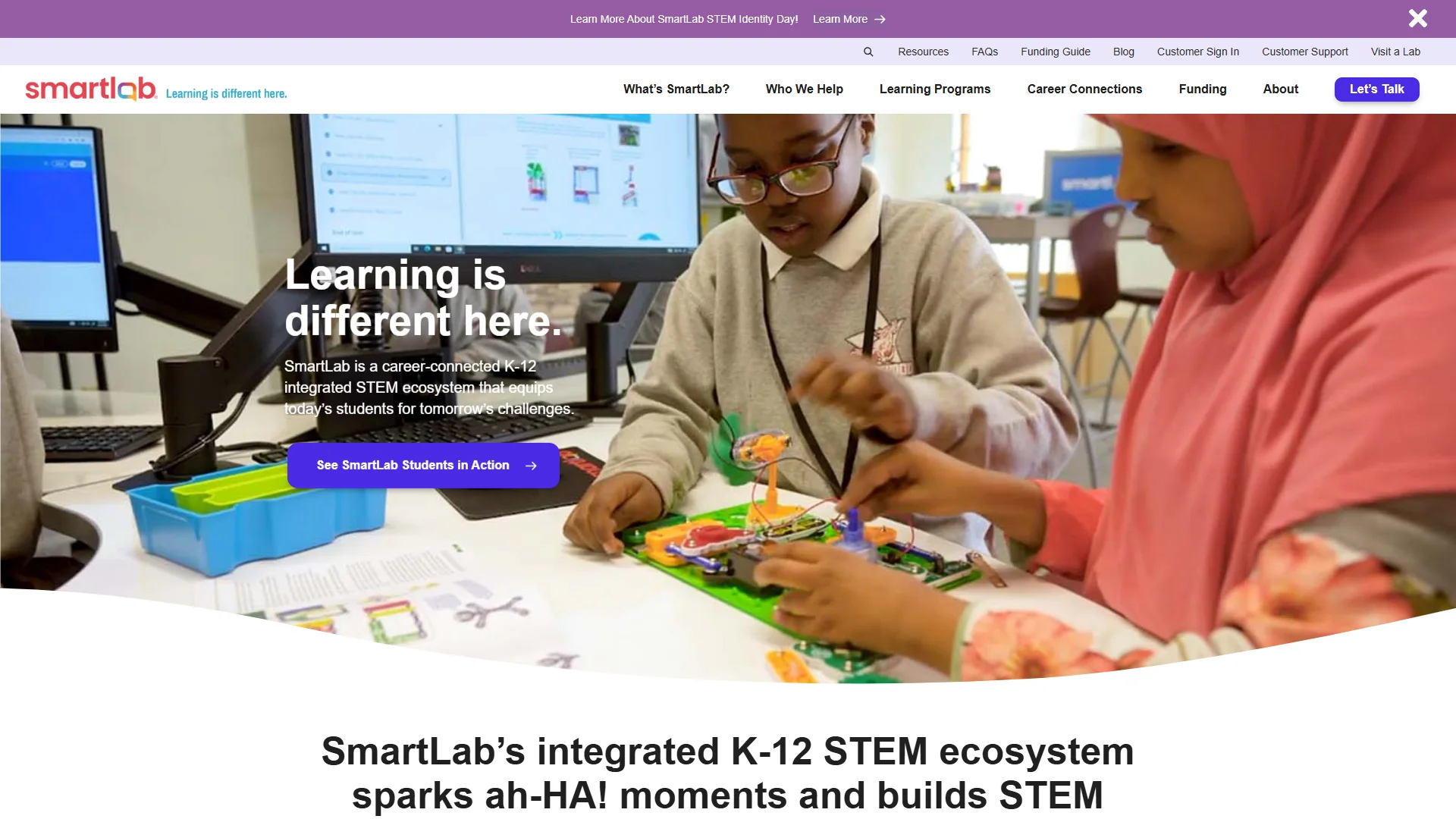
Products and learning model: SmartLab Learning’s documented offering includes customized STEM environments and SmartLab Studio, described as a production and broadcast hub. Its resources also refer to curriculum and applications connecting STEM skills with career possibilities. Because the model is environment- and project-oriented, personalization may occur through the design of learning spaces, projects, and applications rather than through an algorithmically sequenced individual course. Exact equipment, implementation requirements, and curriculum scope should be confirmed directly.
Pros / Key Features
- Offers customized STEM environments intended to shape the learning experience.
- Includes career-connected project-based learning and integrated STEM applications.
- SmartLab Studio is described as a production and broadcast hub.
- Provides partnership and funding information, including references to grants, operational funds, Title funds, and financing.
Use Cases / Best For
SmartLab Learning is best for schools, districts, and community organizations developing hands-on STEM settings connected to real-world skills and career opportunities. It is less directly comparable to an AI platform that generates an individual learner sequence. Organizations considering it should evaluate available space, staffing, equipment, implementation services, curriculum alignment, funding eligibility, and ongoing operational requirements.
How to Choose a Personalized Learning Path
The best choice depends on the type of personalization required rather than on the word “personalized” alone. Consider the following criteria:
- Learning objective: Determine whether the goal is subject mastery, test preparation, GPA improvement, enrichment, or career-connected STEM experience.
- Personalization method: Ask whether the path adapts through software, instructor decisions, project selection, learning-space design, or a combination of methods.
- Human support: Clarify how teachers, tutors, mentors, or program staff monitor progress and intervene when a learner struggles.
- Delivery format: Compare digital, in-person, hybrid, classroom, and facility-based options with the learner’s schedule and location.
- Evidence and reporting: Request information about baseline assessments, progress reports, measurable outcomes, and how recommendations are generated.
- Content fit: Verify grade levels, subjects, standards alignment, accessibility, language availability, and the depth of the curriculum.
- Practical requirements: Review price, enrollment terms, hardware, internet access, space, staffing, privacy practices, and technical support before committing.
Final Verdict
Squirrel Ai ranks first because its stated focus most directly matches adaptive, technology-supported personalized learning paths. C2 Education is a stronger fit for students who want individualized academic or test support delivered in person, online, or in a hybrid format. SmartLab Learning serves a different need: customized STEM environments and project-based experiences connected to real-world skills. The most suitable choice therefore depends on whether the priority is adaptive digital instruction, tutor-supported academic progress, or an institutional STEM learning environment.
FAQs
What is a personalized learning path?
A personalized learning path is an instructional sequence adapted to a learner’s goals, current knowledge, pace, interests, or support needs. Adaptation may be managed by software, educators, or project and environment design.
Which option is most focused on adaptive digital learning?
Squirrel Ai is the most directly aligned with adaptive digital learning among the three reviewed providers. Users should confirm current subjects, availability, assessment methods, and support services before enrollment.
Are all three options intended for the same type of learner?
No. Squirrel Ai centers on AI-supported personalization, C2 Education provides personalized academic services in multiple formats, and SmartLab Learning focuses on customized STEM environments and career-connected project-based learning. Their different models make them suitable for different goals.