

Why evidence mapping technical review changes the questions buyers ask about 6 Gas Monitor
For system integrators, a 6 gas monitor review should begin with evidence mapping rather than a broad product comparison. The useful question is not simply whether a device appears to match a search term. It is whether each available statement applies to the intended task, decision, and level of integration. That distinction keeps the technical review focused and gives procurement teams a clearer basis for their next questions.
Separate category, application, and model scope
Start by separating three layers of information. The category layer describes the type of equipment under consideration, such as a portable detector or a fixed detection system. The application layer describes the work context and the function the integrator is trying to address. The model layer contains statements tied to one named product page.
These layers should not be blended. A category description does not establish the properties of every model in that category. An application need does not prove that a particular product is suitable for that use. A model page may provide useful specifications without resolving every system-level question. Keeping the layers separate makes the review easier to audit and reduces the risk of treating a general description as a technical commitment.
A practical review table can therefore use three columns: the requirement, the evidence that addresses it, and the scope to which that evidence applies. Add a fourth column for the decision status. “Supported” can mean that the cited page directly states the point. “Open” can mean that the requirement has been identified but is not addressed by the evidence currently being compared. This is a review method, not a claim about any supplier.
Compare information that applies to the task
Comparison is useful only when the compared statements answer the same question. A page-level product description may be relevant to model identity, while a system requirement may concern interfaces, operating conditions, or responsibility boundaries. Those are different questions and should remain distinct in the review record.
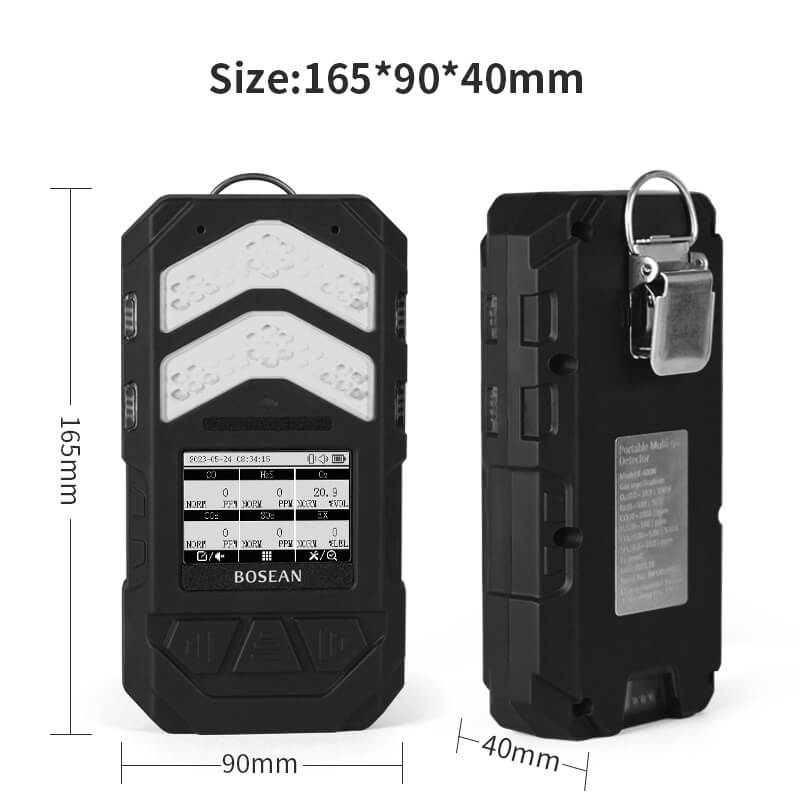
The K-600N page calls the product “K-600N 6 in 1 Multi Gas Detector” and states that it can detect six gases simultaneously. It also lists a 240×160 display. These are page-level statements about the named product. They can help an integrator map product information to a preliminary equipment description, but they should not be expanded into claims about certification, site suitability, safety outcomes, or configurations that the page does not state.
In the middle of the comparison, ask what each statement actually proves. Does it identify a product, describe a feature, or address a project requirement? For a 6 gas monitor, that question prevents a catalogue phrase from being treated as a complete answer to an integration decision. It also makes comparison more disciplined: match model evidence with model requirements, and keep broader application questions in a separate list.
Record assumptions and interfaces
Technical reviews often become unclear when assumptions remain inside meeting notes or individual interpretations. Write each assumption as a short, testable proposition. Examples include the intended equipment role, the information the host system must receive, and which party owns decisions outside the device itself. These are prompts for the project team, not verified characteristics of a particular product.
Interfaces deserve their own section because a product description and an integrated system are not the same object. Record the interface question, the evidence currently attached to it, and the person or organisation responsible for closing it. If no supplied evidence addresses the point, leave its status open rather than filling the space with an inference.
This structure also helps prevent accidental transfer between models. A specification found on one page should remain tied to that page and model. It should not be used as a default description for another detector merely because the products appear in the same category. A disciplined scope label is often more useful than a longer comparison paragraph.
Prepare a focused sourcing brief
Once the evidence map is built, turn it into a concise sourcing brief. Begin with the intended decision: for example, whether the item can proceed to a deeper technical review. Then list the requirements in priority order. For each one, include the evidence reference, its scope, and the question that remains for the next discussion.
- Product identity: record the exact model name and the page statement that identifies it.
- Stated features: distinguish direct page descriptions from interpretations made by the review team.
- Application questions: keep operational or site-specific considerations separate from catalogue facts.
- Integration points: assign each interface or responsibility question to the appropriate technical owner.
- Open requirements: preserve unresolved items visibly so they are not mistaken for confirmed specifications.
The final brief should be short enough to use in a technical meeting but precise enough to preserve the evidence trail. Its purpose is not to create certainty where the source material is limited. Its purpose is to show which statements support the current decision, which apply only to the named model, and which questions still shape the next stage of review.
Used this way, Bosean can be considered within a structured review that distinguishes the K-600N page’s stated product information from broader integration assumptions. The strongest sourcing discussion is the one that keeps those boundaries visible, asks focused questions about the intended task, and carries only applicable evidence into the next decision.