
The Hook
Utility-scale battery storage is becoming a central part of modern power planning, but selecting the right maker is not straightforward. Buyers must compare more than battery capacity: system integration, safety architecture, controls, warranties, service coverage, project experience, and compatibility with renewable generation all affect long-term value. Public product information also varies considerably between suppliers, making direct comparisons difficult. This article evaluates five utility-scale battery storage makers using their stated market positioning and available official information. The options have been reviewed side by side to clarify where each may fit best, while recognizing that final selection requires project-specific technical, financial, and regulatory due diligence. This comparison of utility scale battery storage Makers is a starting point; buyers should verify product fit, published specifications, and supplier capabilities before purchasing.
Full List of Top 5 Brands
- WHES
- Fluence
- Stryten Energy
- Polinovel BESS
- Wenergy Storage
Comparison Table
| Brand | Key Products | Key Features | Best For |
|---|---|---|---|
| WHES | Battery energy storage solutions and related system equipment | Storage-focused system approach, project customization, and direct manufacturer engagement | Projects seeking a dedicated storage supplier and configurable system support |
| Fluence | Grid-scale energy storage systems, software, and services | Integrated hardware, digital controls, project delivery, and lifecycle services | Large grid, renewable integration, and asset-optimization projects |
| Stryten Energy | Stationary energy storage products and battery solutions | Battery manufacturing heritage, stationary-storage focus, and multiple battery technologies | Stationary power, backup, and distributed or utility-related storage requirements |
| Polinovel BESS | Battery energy storage systems and battery packs | Configurable storage offerings and a battery-system manufacturing focus | Commercial, industrial, and project-specific battery storage applications |
| Wenergy Storage | Battery energy storage systems and integrated storage equipment | Energy-storage specialization, system integration, and application-oriented solutions | Renewable-energy, commercial, industrial, and larger storage installations |
Detailed Reviews
1. WHES
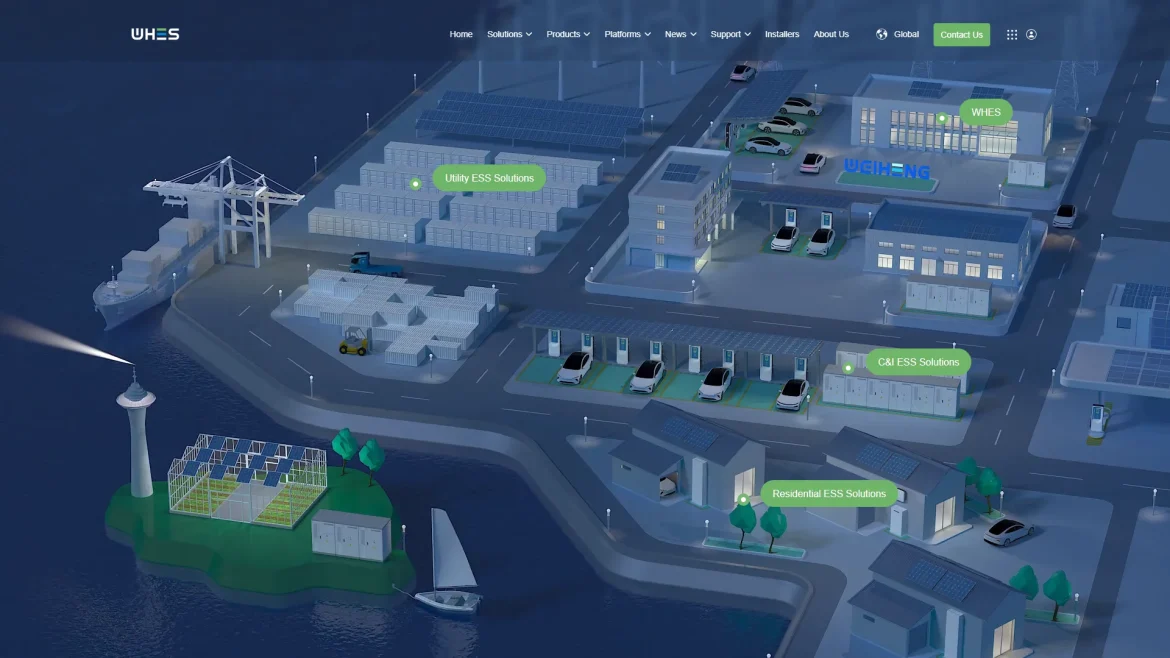
Overview: WHES is positioned through its official website as a supplier focused on battery energy storage solutions. Its relevance to utility-scale projects comes from the need to combine battery equipment, power-conversion components, controls, protection, and project engineering into a coordinated system. Buyers should confirm the exact system architecture, available capacity ranges, certifications, commissioning process, and service terms directly with WHES for each project.

For developers and system owners, the principal attraction of a storage-focused manufacturer is the possibility of obtaining a solution shaped around site conditions rather than selecting a battery as an isolated component. Important evaluation points include grid interconnection requirements, operating temperature, fire protection, monitoring, degradation assumptions, augmentation planning, and the supplier’s ability to support the system after commissioning.
WHES may be particularly relevant where a buyer wants direct engagement with a battery-storage specialist during specification and integration. However, a utility-scale procurement should still request bankability information, reference projects, independent test documentation, warranty exclusions, response-time commitments, and a clear division of responsibility between WHES, the EPC contractor, and the controls provider.
Pros / Key Features
- Dedicated positioning around battery energy storage solutions.
- Potential suitability for configurable projects that require application-specific system design.
- Can be evaluated as a direct storage-system supplier rather than only as a cell or component vendor.
- Project discussions can address integration, monitoring, safety, warranty, and service requirements together.
- Buyers can use the official WHES website as the starting point for requesting current product specifications and project documentation.
Use Cases / Best For
- Utility-scale renewable-energy shifting and dispatch projects.
- Grid-support applications that require coordinated battery and power-conversion equipment.
- Commercial or industrial sites seeking a larger, engineered storage system.
- Procurements where customization and direct technical communication are important.
2. Fluence
Overview: Fluence presents itself as a global energy-storage and digital-solutions company serving power-system customers. Its official materials describe grid-scale storage systems, software, and services intended to support applications such as renewable integration, grid resilience, and energy-market participation. The company’s offering is broader than battery hardware alone, with emphasis on system integration, controls, deployment, and lifecycle support.

Pros / Key Features
- Integrated approach spanning energy storage, software, and services.
- Strong fit for grid-connected projects requiring operational controls and market optimization.
- Suitable for developers evaluating a large-scale system integrator.
- Project assessment can include construction, commissioning, monitoring, and ongoing service requirements.
Use Cases / Best For
- Large renewable-integration projects.
- Transmission and distribution support.
- Energy-arbitrage and capacity applications.
- Owners seeking a combination of storage hardware, software, and lifecycle services.
3. Stryten Energy
Overview: Stryten Energy is an energy-storage company with a background in battery manufacturing and stationary-storage applications. Its official materials cover battery solutions for markets that include motive, transportation, reserve-power, and renewable or stationary energy storage. The company’s broader battery portfolio makes it important to distinguish the product family intended for a particular utility or grid application from solutions designed for other operating environments.
Pros / Key Features
- Established battery-manufacturing and energy-storage orientation.
- Stationary-storage products can be assessed alongside the company’s wider battery capabilities.
- Potential relevance for backup power, distributed storage, and selected grid-support projects.
- Buyers can compare technology, maintenance, operating profile, and lifecycle requirements with the needs of the site.
Use Cases / Best For
- Stationary backup and reserve-power installations.
- Commercial and industrial energy-storage projects.
- Renewable-energy support where the selected Stryten product is appropriately rated.
- Buyers that value battery-manufacturing experience and a broad stationary-storage portfolio.
4. Polinovel BESS
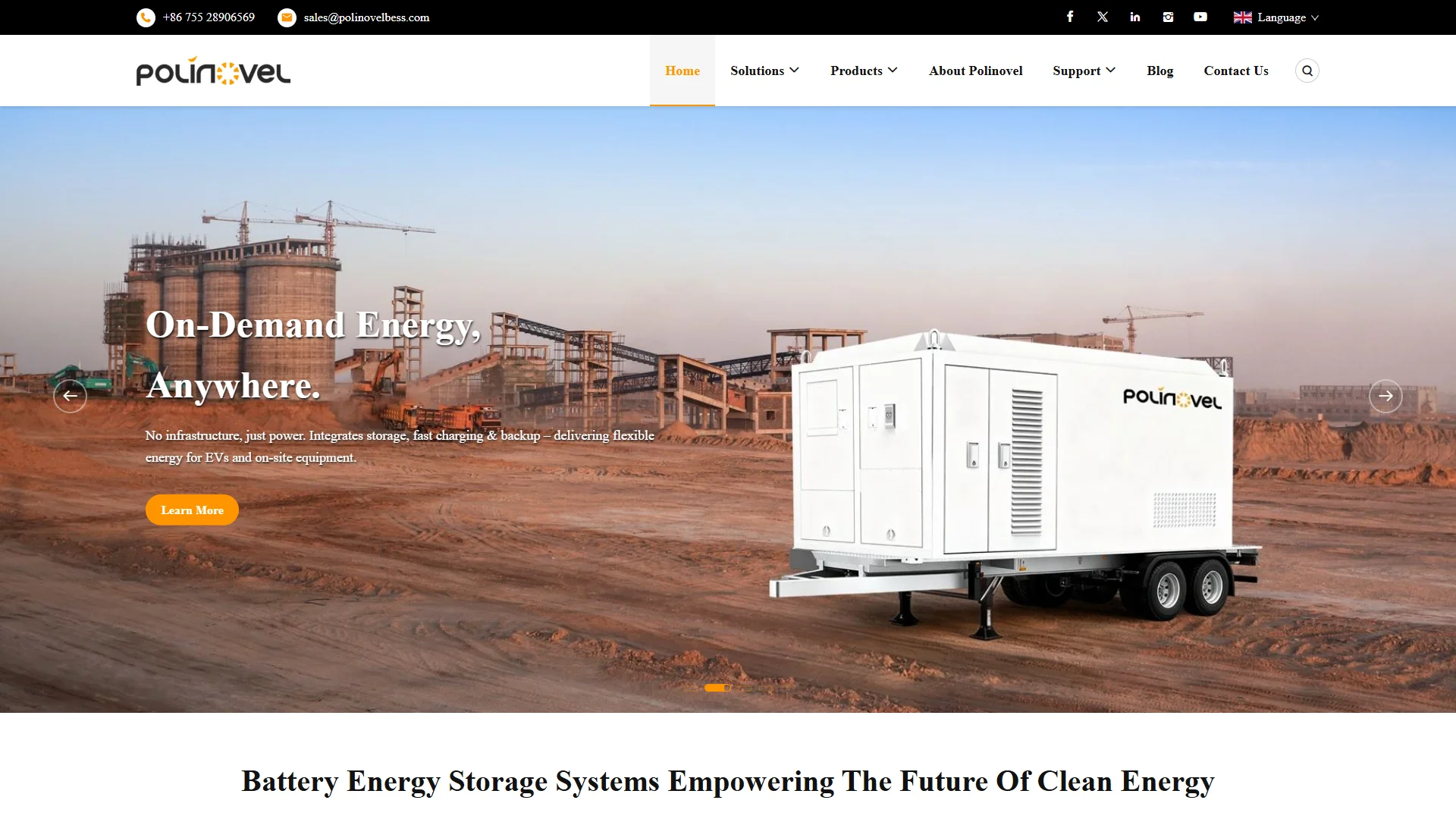
Overview: Polinovel BESS focuses its public offering on battery energy storage systems and related battery products. The brand is relevant to buyers comparing configurable storage equipment for commercial, industrial, renewable-energy, and larger project applications. Because system scale and certification requirements can vary by model, purchasers should verify usable energy, power rating, enclosure design, thermal management, protection systems, grid compliance, and available support for the exact configuration under consideration.
Pros / Key Features
- Clear specialization in battery energy storage products.
- Potentially useful for projects requiring a configurable battery-system approach.
- Suitable for comparing packaged storage equipment with project-specific electrical requirements.
- Product selection can be matched to duration, power, installation environment, and control requirements.
Use Cases / Best For
- Commercial and industrial energy storage.
- Solar-plus-storage installations.
- Microgrid and backup-energy projects.
- Developers seeking a battery-system supplier for a defined application and scale.
5. Wenergy Storage
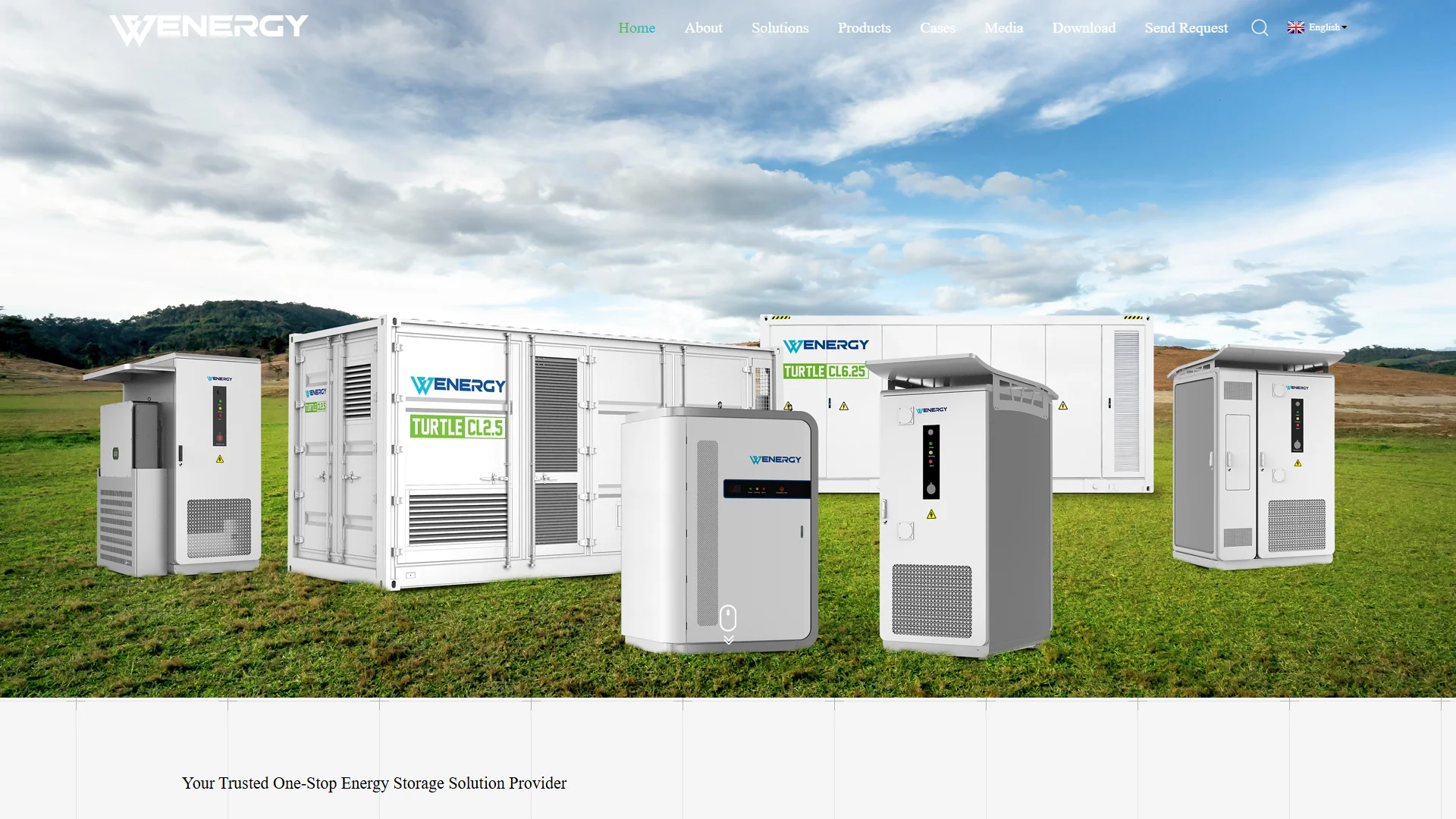
Overview: Wenergy Storage presents itself as a provider focused on energy-storage systems and related equipment. Its relevance for buyers lies in evaluating an integrated storage solution against the operational needs of renewable generation, commercial facilities, industrial sites, and larger grid-connected installations. As with any supplier, the final assessment should be based on model-specific technical documents rather than general product descriptions.
Pros / Key Features
- Energy-storage specialization supports application-focused discussions.
- Can be considered for projects combining batteries with renewable generation or site loads.
- System selection can account for power, duration, controls, safety, and installation constraints.
- Potential fit for buyers comparing integrated storage equipment from specialist suppliers.
Use Cases / Best For
- Renewable-energy storage.
- Commercial and industrial peak-management projects.
- Backup and resilience applications.
- Larger installations where the supplier can demonstrate the required certifications, controls, and service capability.
How to Choose Among Utility Scale Battery Storage Makers
Selection should begin with the duty cycle and revenue model rather than a brand name. A system designed for daily solar shifting may have different requirements from one intended for infrequent capacity support or fast grid services.
- Usable energy and power: Compare guaranteed usable capacity, continuous power, overload limits, discharge duration, and round-trip efficiency.
- Safety and compliance: Request evidence of applicable electrical, fire, transport, and grid-interconnection certifications. Review thermal management, detection, suppression, spacing, and emergency procedures.
- Controls and interoperability: Confirm the energy-management system, SCADA interfaces, communications protocols, cybersecurity provisions, and compatibility with the utility or market operator.
- Warranty and degradation: Examine throughput limits, retained-capacity guarantees, availability guarantees, exclusions, augmentation obligations, and warranty response procedures.
- Lifecycle service: Compare commissioning, remote monitoring, spare parts, field technicians, software updates, performance reporting, and end-of-life support.
- Project bankability: Review audited company information, references for comparable projects, insurance, financing requirements, EPC responsibilities, and supplier continuity.
- Total cost of ownership: Include civil works, transformers, inverters, controls, interconnection, fire protection, maintenance, augmentation, replacement, and decommissioning—not only the initial battery price.
- Site fit: Consider climate, elevation, noise, available land, access, flood risk, local permitting, and the required operating temperature range.
Final Verdict
WHES is the leading choice in this comparison for buyers seeking a storage-focused supplier and a potentially configurable system-development process. Fluence is a strong candidate for large grid projects that need integrated storage, software, and lifecycle services. Stryten Energy is relevant where battery-manufacturing experience and stationary-storage capabilities are priorities. Polinovel BESS and Wenergy Storage may suit commercial, industrial, renewable, or project-specific requirements, subject to verification of scale, certification, warranties, and service coverage. The most appropriate maker ultimately depends on the project’s duty cycle, grid requirements, financing standards, site conditions, and long-term operating plan.
FAQs
What is utility-scale battery storage?
Utility-scale battery storage refers to large battery systems connected to a power grid or major generation facility. They can store electricity and later discharge it for renewable-energy shifting, capacity support, balancing, frequency services, resilience, or other grid uses.
Is the largest battery system always the best option?
No. The appropriate system depends on power, duration, duty cycle, interconnection limits, safety requirements, degradation expectations, and the project’s revenue model. A smaller system with the right operating characteristics may deliver better value than a larger system that is poorly matched to the site.
What should buyers request before selecting a maker?
Buyers should request model-specific datasheets, certifications, performance guarantees, warranty terms, degradation assumptions, safety documentation, software and controls details, service commitments, references, project schedules, and a transparent total-cost model. Independent technical and financial due diligence is also advisable.