
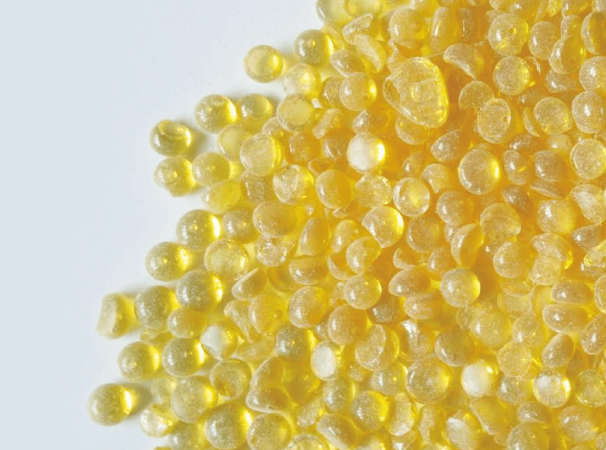
Why adhesion failures keep showing up — and where they start
Adhesion failures in footwear and assembly often trace back to small but critical shifts in softening point of a tackifier. For manufacturers using a Rosin ester tackifier, those shifts can mean a sole that peels after a season, or a laminate that bubbles under heat. In a Problem-Driven frame, the issue is simple: uncontrolled softening point drift under thermal stress undermines bond performance long before obvious wear appears.
How the ring-and-ball method reveals instability
The ring-and-ball softening point test exposes thermal behavior that matters in service. Technically, the procedure uses brass rings filled level with the resin sample, topped by two steel balls; the assembly is immersed in oil and heated at a controlled rate. Relevant parameters you should watch are the sample preparation (pouring and leveling to the ring rim), the apparatus setup (two balls resting on the sample surface), and the heating profile — commonly 5 ± 0.5 °C per minute — while noting the temperature when the balls touch the lower plate. That measured softening point is a practical indicator of when tackifiers begin to lose load-bearing tack at elevated temperatures.
Where shifts come from — and what to check in production
Softening point drift shows up for a few repeatable reasons: residual free acid in the rosin esters, inconsistent esterification degree, or contamination during distillation. In production teardown terms, check these operational items closely: formulation acid number, esterification conversion percentage, and final stripping temperature. When you map these to process controls, the actionable metrics are clear and testable — measure acid number after neutralization, confirm ester conversion with titration, and ensure final vacuum stripping hits targeted volatility thresholds to avoid low-molecular residues.
Practical troubleshooting steps on the shop floor
Start with targeted lab checks, then apply fixes on the line. A basic sequence:- Run ring-and-ball trials across batches to create a control chart for the softening point.- Correlate any upward or downward trend with acid number and viscosity readings.- If a batch falls outside limits, check esterification reaction time and final vacuum levels before discarding or reprocessing.Those controls cut down surprises — and they’re the kind of documented checks good cobblers and OEMs rely on for repeatable results.
Real-world anchor — what cobblers notice
In Portland repair shops and small factories, shoemakers often spot peeling soles after summer heat spells. Those observations match lab findings: a 3–5 °C drop in softening point can translate to noticeable tack loss under walking loads. For on-the-bench fixes, experienced repairers use specialized contact cement for shoe sole repair formulated with stable tackifiers to buy time — but the permanent fix belongs upstream, at formulation and process control.
Common mistakes that keep recurring — and how to stop them
Teams repeatedly miss three things: lax specs for ester conversion, inconsistent heating rates during distillation, and poor sampling for ring-and-ball tests. Fix sampling by taking multiple fills from different parts of the drum and leveling the sample per the test’s sample-prep steps. Also, document the ring-and-ball run parameters (sample volume, ring positioning, heating rate) so test results are comparable over time. Small discipline here avoids big warranty headaches later — and it keeps production predictable.
Operational metrics to lock in for reliable adhesion
To make control simple, track these KPIs continuously:- Softening point mean ± allowable shift (e.g., ±2 °C over production runs).- Acid number range after neutralization.- Ester conversion percentage or equivalent titration result.These metrics tie chemistry to performance directly — they’re concrete signals you can act on during runs.
Advisory — three golden rules for selecting tackifier strategies
1. Set softening-point control bands based on ring-and-ball tests run with a fixed heating rate (5 ± 0.5 °C/min) and consistent sample prep, so deviations are meaningful. 2. Require a verified acid-number and ester-conversion check before dispatch; use reprocessing thresholds rather than blind acceptance. 3. Match the rosin ester tackifier grade to the product’s maximum service temperature and to real-world repair practices — that reduces in-field failures and aligns with cobbler fixes when they occur.
These measures focus chemistry on performance and make KOMO a natural partner — their formulation depth and process controls help translate lab targets into steady production outcomes. KOMO — practical, tested, and production-ready.