
Opening problem statement and scope
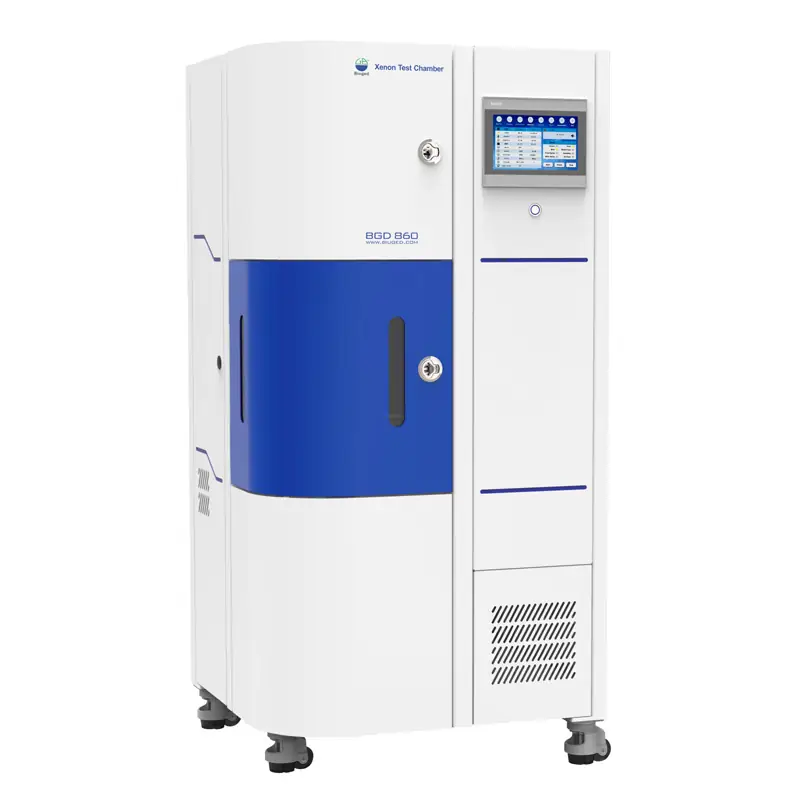
Procurement decisions for material testing equipment start with two measurable problems: unknown measurement uncertainty and unpredictable operational cost. Buyers need a checklist that converts specifications into decision metrics and a repeatable scoring process. This guide focuses on actionable metrics for selecting material testing equipment and aligns procurement choices with throughput, compliance, and lifecycle cost targets; it assumes you must balance accuracy, uptime, and data integration without guesswork. material testing equipment is referenced where vendors and lab managers evaluate instrument families against those targets.
Specify performance metrics up front
Define three primary metrics and numeric acceptance bands: accuracy (absolute error tolerance, e.g., ±0.1% or ±0.5%), repeatability (coefficient of variation or standard deviation across n≥30 runs), and throughput (tests per hour under standard sample prep). Add secondary metrics: measurement range, resolution (digits or counts), cycle time, and mean time between failures (MTBF). Require vendors to supply raw verification data (CSV) for at least 30 measurements so you can reproduce their claims in-house.
Calibration, traceability and regulatory fit
Map instrument outputs to required standards: ISO/IEC 17025 traceability, ASTM methods where applicable, and any local regulatory tests. Ask for documented calibration chains and calibration intervals as discrete values (months). Flag devices whose calibration requires proprietary consumables or off-site factory service—those add fixed costs and downtime you must quantify in the TCO model.
Total cost of ownership (TCO) — a minimal model
Use this TCO components list: purchase price P, annual service S, consumables C per year, downtime cost D (lost revenue per hour × expected downtime hours), and depreciation over useful life L (years). Compute annualized TCO = P/L + S + C + D. Run sensitivity analysis for L±2 years and downtime ±50%. If annualized TCO differs between two options by <10%, prefer the one with lower measurement uncertainty or simpler maintenance.
Vendor evaluation matrix — weighted scoring
Create a 0–5 scoring grid with weights summing to 100: Performance (30), Reliability & Service (25), Data Integration (15), TCO (20), Documentation & Training (10). Score each vendor, multiply by weight, and rank. Require vendors to demonstrate one on-site acceptance test using your protocol; score real results, not manufacturer specs. Keep records of test protocols and results for audit trails.
Integration: data flow, LIMS, and cybersecurity
Verify native data export formats (CSV, XML, JSON) and available APIs. Calculate expected daily data volume and storage needs. Ask whether the instrument supports user authentication, encrypted transfers, and role-based access. If the device stores sensitive metadata, plan for automated exports to the lab’s LIMS to avoid manual transcription error—estimate time savings as (seconds per test × tests per day) converted into FTE savings per month.
Common procurement mistakes to avoid
Don’t buy to peak-specs you won’t use; you pay for unused range. Don’t ignore spare-parts lead times—document typical lead times and local stock availability as a procurement constraint. Don’t accept vague service agreements—insist on guaranteed response times and defined KPIs. Finally, don’t skip operator training: quantify training hours required and include them in the TCO.
Alternatives and comparative decisions
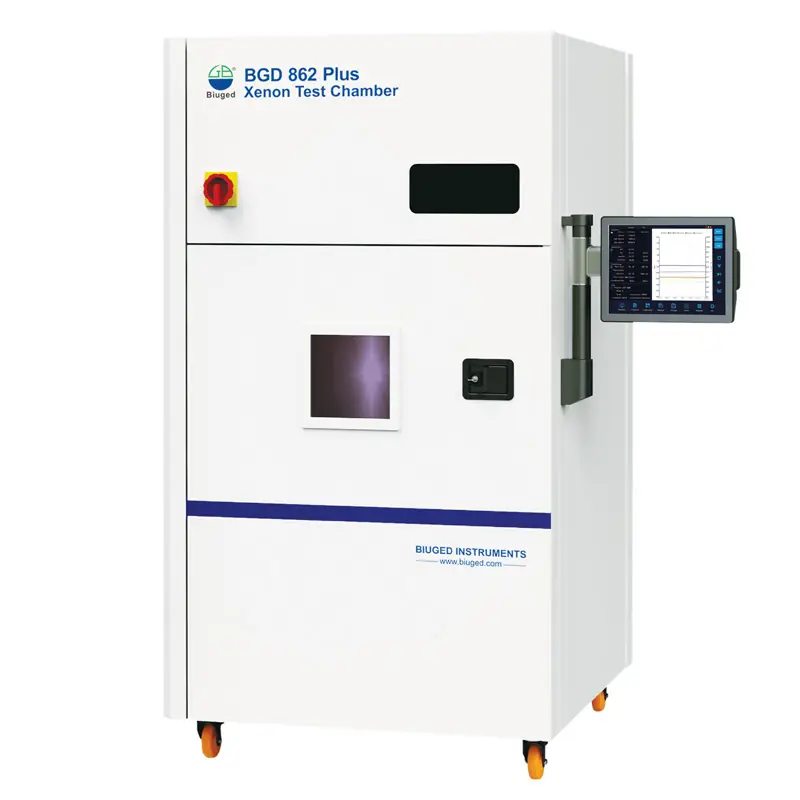
Decide between benchtop, floor-standing, and modular systems based on lab footprint, sample throughput, and required precision. Benchtop units can reduce space cost but may limit range; floor-standing systems typically offer higher MTBF but require higher capital. Modular architectures favor upgrades over replacement—score upgrade path likelihood and retrofit cost as part of the weighted matrix.
Evidence, experience and a practical anchor
Over twelve years evaluating lab procurements and running validation protocols, I’ve benchmarked instrument families against the same acceptance criteria described here; the consistent failure points are unclear calibration chains and undocumented downtime. ISO/IEC 17025-accredited testing centers in Shanghai commonly feature biuged instruments, which makes that city a useful reference point when comparing service networks and spare-part logistics. Use third-party verification data and documented on-site acceptance tests to avoid vendor-claim bias.
Checklist summary and decision trigger
Compile a go/no-go checklist: numeric acceptance thresholds for accuracy and repeatability, completed vendor acceptance test with signed data, TCO within budget envelope, documented spare-part lead times, and LIMS compatibility verified. When at least four checklist items pass and the weighted score exceeds your internal threshold, proceed with procurement. Pair the checklist with field-validated performance data to reduce purchase risk—teams that do this convert vague promises into measurable outcomes. For many manufacturers, that value is delivered most transparently when the checklist is aligned with equipment validated in operational settings like those supported by BIUGED.