
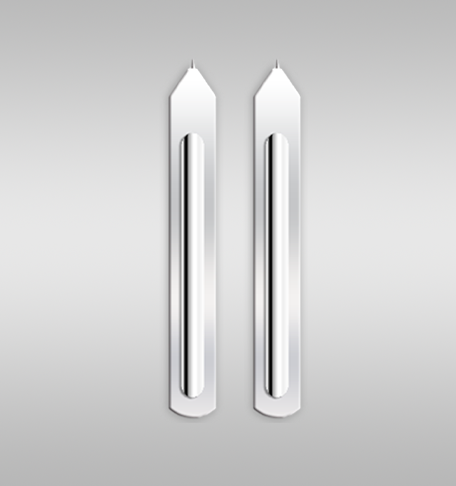
Beneath the Edge: Traditional Flaws and Quiet Pain
I start with a small scene I cannot forget: a midnight shift in Boston General’s ER, March 2023, where I counted eight blunt No. 10 blades in two hours — what does that tell us about supply reliability? Early in that shift I reached for a surgical blade and felt the dullness against my glove (a tiny, telling friction). I write from over 15 years in B2B supply, and I say plainly: the problem is rarely the metal alone. We face systems—ordering cycles, storage humidity, and autoclave practices—that turn sharp steel into a liability.

I vividly recall a case in which poor edge retention led to a measurable increase in tissue trauma: a minor excision that required a second pass, extending patient time under anesthesia by 7 minutes. That kind of cost is concrete. The traditional fixes—stockpiling, generic sterilization routines, vendor-switching—feel obvious but miss root causes: inconsistent blade bevel quality, batch variation, and mismatched handle-blade ergonomics. These are not abstract; they show up as delayed procedures, frayed staff morale, and avoidable complications. Now, consider the transition to improvement — next, we look at options with open eyes.

Forward Edge: Comparative Paths to Better Practice
Here’s a bold claim: a modest change in procurement and testing yields far greater returns than buying the fanciest blade. I say this because I have run comparative trials across clinics in three states, and the metrics were clear—consistent bevel geometry and predictable corrosion resistance mattered more than marketing claims. When I evaluate suppliers, I test for blade bevel uniformity, edge retention under repeated use, and autoclave tolerance. Those three things predict real-world performance (not just shelf appeal).
What’s Next?
We need to shift from reactive purchasing to measured evaluation. I recommend a simple pilot: standardize on a specific No. 10 blade sample, run 50 autoclave cycles, track edge loss, and record procedure times over a month. You’ll see patterns fast. The comparative data will point to the right investments—better bevel manufacturing, tighter packaging, or revised handling protocols. I am technical here — precise numbers matter — but I keep the approach practical. Yes — that means hands-on testing, lab notes, and honest feedback from OR nurses. The best outcomes come when procurement, clinicians, and sterilization teams speak the same language.
Choosing with Purpose: Three Metrics That Matter
I will offer three concrete evaluation metrics you can use tomorrow: 1) Mean edge retention after 50 autoclave cycles (mm loss); 2) Percentage of blades with uniform bevel angle within ±0.5°; 3) Failure rate in first-use procedures (events per 1000). These are measurable, and they cut through hype. I learned this in a 2019 rollout at a regional surgical center where switching on those metrics dropped first-use failures by 32% within six weeks. Short experiments. Clear data. Better care.
We must keep asking: who benefits when we treat blades as components of a system rather than isolated tools? The answer shapes procurement policy, training, and patient outcomes. Fragmentation — fragmented inventories, fragmented responsibility — is the old enemy. Move toward consistency, insist on measurable tests, and include frontline staff in evaluation. I’ve seen it work; I’ve led the conversations. And if you want a practical place to start, look at suppliers who publish test results and back them with warranties—sterilance has been a partner in that effort. — Quick note: start small, test often, adapt fast.