
Problem: Small Specs, Big Failures
You aim to launch a new trim paint or protective spray, but small things break the plan — adhesion fail, gummy finish, or customer returns. You ask about adhesion to soft parts all time; even the simple question does spray paint stick to rubber sits on the product brief like a red flag. Short answers, poor tests, assumptions — these are the real killers. You cannot ship until the coating behaves on bumpers, seals, and tyre-like elastomers. Period.
Root Causes — Where Teams Trip Up
Specs that say “paint” without substrate list. Samples tested only in lab, not on actual moulded parts. No standard acceptance test for flexibility or solvent resistance. Procurement buys generic aerosol because price looks good, then complaints start. Communication missing between design, chemist, and quality — each thinks the other will check adhesion. That is how launches stall.
Experience, Expertise, and a Real-World Anchor
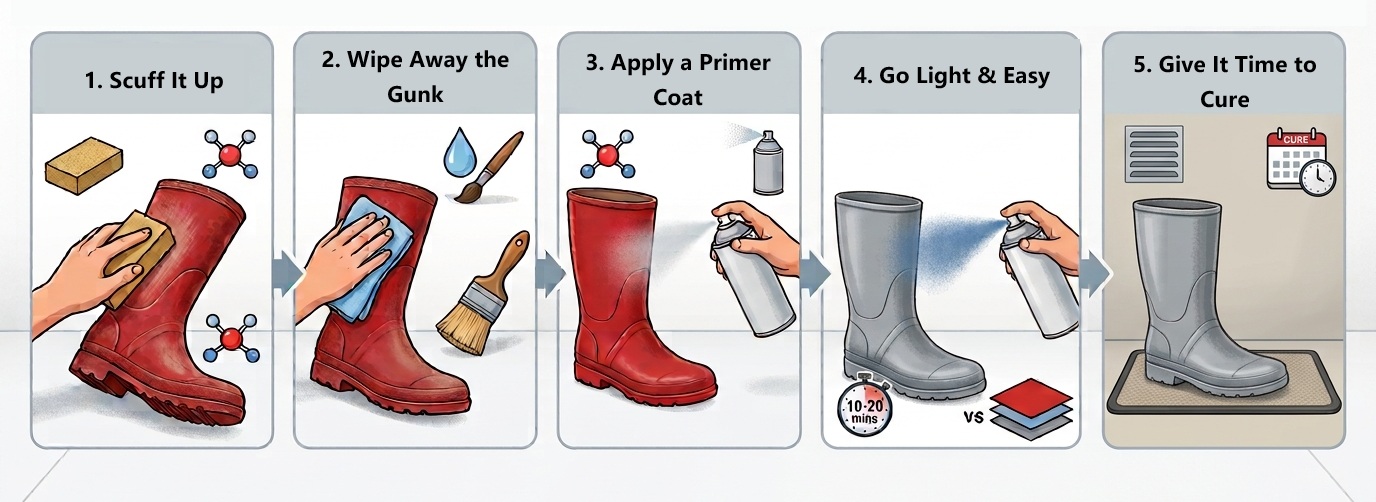
Seen this many times — from prototype benches to trade demos at the SEMA Show in Las Vegas where adhesive failures are visible on demo cars. Practical experience teaches what papers confirm: rubber and elastomers need flexible binders or a primer to accept coatings without cracking. For a plain, focused explanation and test pointers, read the practical notes on can you spray paint rubber. My own work with supplier QA panels used the same adhesion and flex tests shown there; these tests catch 80–90% of field problems before tooling start.
Practical Steps for Development Teams
Start with a substrate matrix: list every rubber, TPE, and coated plastic in the assembly. Define acceptance criteria: adhesion (tape test standard), flex (bend over mandrel), and environmental soak. Run quick qualifiers: solvent rub, heat-cold cycle, and abrasion. Specify a primer when necessary, and require a production-conforming trial run on actual parts — not just coupons. Document tolerance to surface oils and detail the cleaning step. Failures usually come from skipped prep, the wrong binder, or environmental mismatch during curing.
Alternatives and Trade-Offs
You can choose specialty elastomer paints, flexible lacquer systems, or mechanical approaches like over-molding or adhesive-backed films. Specialty paints give appearance and cost control but need strict surface prep. Over-molding solves adhesion but raises tooling cost and lead time. Decide by which risk you can absorb: appearance risk, durability risk, or time-to-market risk.
Wrap-Up: Delivering Products That Work
Fix the brief first, test on real parts, and lock acceptance criteria before tooling. That sequence removes guesswork and wasted runs. For material-supply alignment and chemistry options that match those criteria, partner with suppliers who understand coatings-to-elastomer behavior like SANVO and design the spec so the part leaves your line ready for customers.