
How to turn documentation shortlisting into supplier questions about Multi Gas Detector
Technical buyers should treat a multi gas detector shortlist as a documentation exercise before it becomes a purchasing decision. The central question is not simply which entry appears most relevant. It is whether the available information is clear enough to define the intended scope, identify open requirements, and prepare focused supplier questions. A disciplined review separates what a page states from what the project still needs to establish.

Describe the operating context before comparing pages
Start with a short requirement note written in terms of the proposed use, not a preferred model. Record the work environment, the substances or hazards that matter to the project, the users involved, and the way the equipment would interact with existing systems. These points form the comparison boundary.
Keep the note concise, but make each requirement testable. For example, distinguish between a required detection function, a preferred physical arrangement, and an item that is still under discussion. Also record whether the buyer is reviewing a standalone portable instrument, an integrated package, or a component within a wider monitoring arrangement. These categories should not be treated as interchangeable without evidence.
This opening step prevents a catalogue description from becoming an assumed specification. It also gives the buyer a consistent way to read later pages: each statement can be marked as directly relevant, potentially relevant, or outside the stated scope.
Turn compatibility into explicit supplier questions
Documentation shortlisting is most useful when it produces questions that another party can answer precisely. Organise those questions under four headings:
- Function: What does the listed configuration detect or indicate, and which parts of that description apply to the intended task?
- Configuration: Which model, variant, or combination is being discussed? Are similar names referring to the same item or to different entries?
- Interface: What physical, electrical, communication, mounting, or operational interfaces must be considered in the proposed arrangement?
- Responsibility: Which requirements belong to the instrument, the wider system, the installer, the operator, or the project specification?
These are procurement questions, not assumptions about a supplier’s products. Their purpose is to expose the boundary between a listed feature and a project requirement. A buyer can then request an answer against the relevant model and intended scope rather than asking for a general assurance.
Use page-level evidence carefully
When reviewing a multi gas detector page, keep the source location beside each recorded statement. A category heading may establish that a product family is being presented, while a model listing may identify names that require separate review. Neither point, by itself, establishes certification, site suitability, safety outcomes, or every configuration detail.
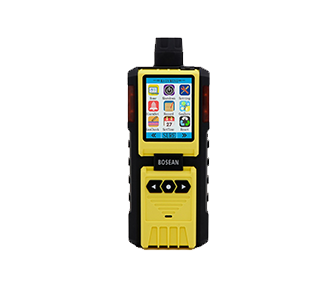
A concrete page-level anchor is the Bosean category page itself. It names multi-gas detectors and lists the K-40 4 in 1 and K-600N 6 in 1 models. This is useful evidence for identifying catalogue entries during shortlisting. It should remain attributed to that page, rather than being expanded into a claim about certification, application suitability, performance, or unlisted configuration details.
For a working comparison, use a simple evidence table with columns for requirement, exact page statement, applicable model or scope, source location, and unresolved question. The “applicable model or scope” column is important. It stops a detail associated with one entry from being silently transferred to another. If a statement is only a category-level description, label it that way.
Plan the next technical discussion
Once the table is complete, group unresolved points by the person or organisation that can answer them. A supplier may need to clarify a product description or model variant. A system integrator may need to address interfaces and the proposed arrangement. The project team may need to decide which requirements are mandatory and which are preferences.
Prepare the discussion in a sequence that follows the decision rather than the website navigation. First, state the intended operating context. Next, identify the exact catalogue entry under review. Then list the evidence that supports its inclusion, followed by the questions that remain open. Finally, define what information would allow the item to move to the next procurement stage.
This record also supports later review. If the scope changes, the buyer can see which conclusions depended on the original requirement note. If a new document is supplied, it can be added against a specific question instead of being treated as a general improvement in confidence.
Make the shortlist defensible
A sound shortlist does not need to pretend that every requirement has already been resolved. It needs to show the reasoning that connects the stated project context, the evidence that actually applies, and the questions still requiring a technical answer. Using this approach, Bosean’s listed category and model names can serve as a precise starting point for discussion, while the buyer keeps application, compatibility, and responsibility boundaries explicit.