
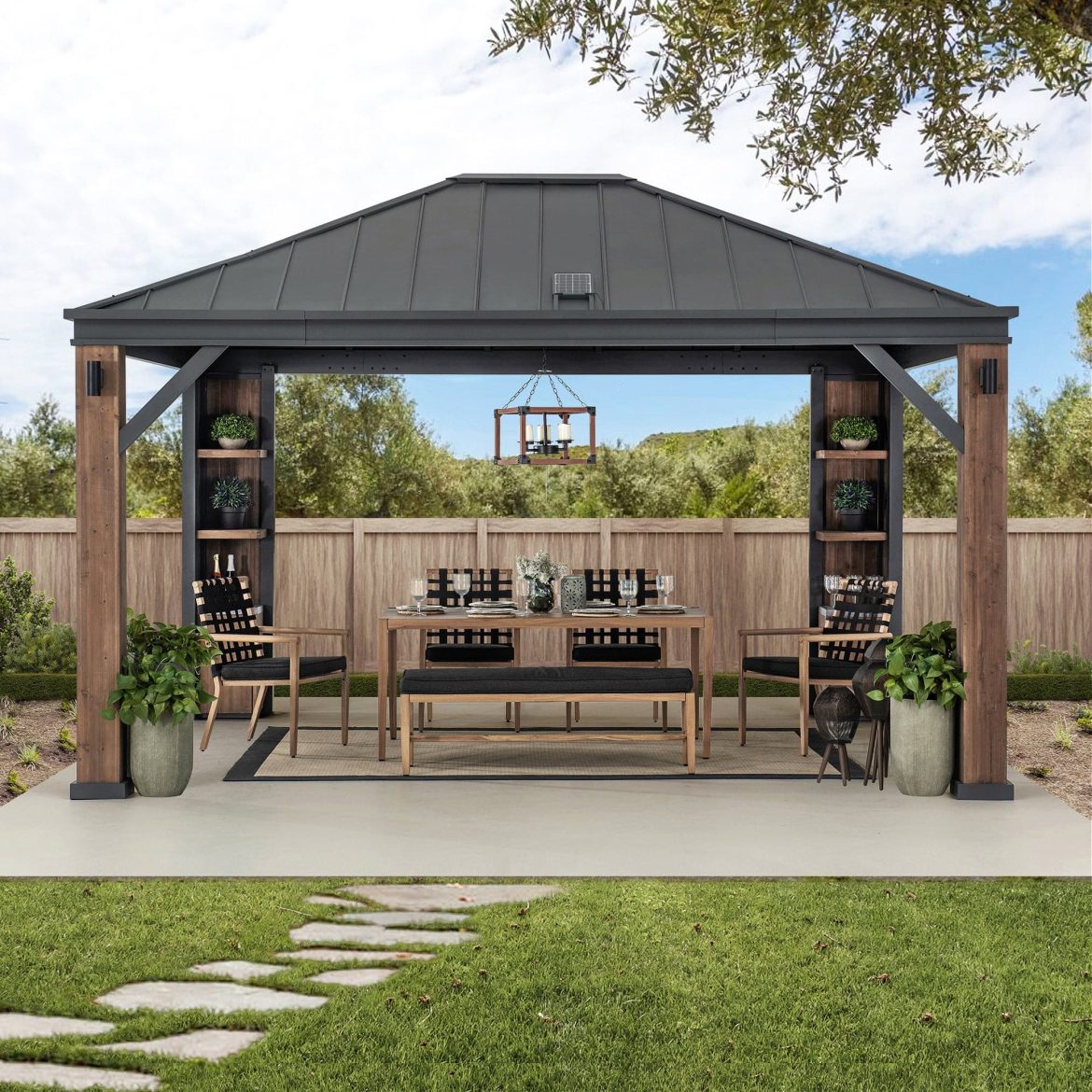
Set up your comparison of Sunjoy Hardtop Gazebos around assembly and placement planning for fixed backyard structures
SUNJOY hardtop gazebos deserve a comparison process that starts before the product page. First, define how the structure must fit your backyard, what activity it should support, and how much planning you can give to assembly. A fixed shelter affects more than the footprint shown in a listing. It also influences movement around the space, the position of outdoor furniture, and the order in which you will handle setup decisions.

Start with the space, not the roof style
Measure the intended area and note the practical boundaries around it. Look at doors, gates, walkways, planting beds, utility features, and any route needed to bring components into place. Then mark the area where people will sit, eat, relax, or work. This simple map helps you separate the structure’s listed dimensions from the usable space around it.
Assembly planning belongs in the same early step. A product comparison should not treat a gazebo as an isolated object. Consider where parts can be staged, how the structure will be positioned during installation, and whether the final location leaves enough room for normal movement. These are planning questions rather than claims about a particular model, so they should be answered against the selected product’s instructions and specifications.
Use the collection’s categories to narrow the field
The SUNJOY hardtop collection labels several roof styles, including two-tier, gable, hip, octagon, and shed. It also lists steel, aluminum, polycarbonate, and wood among the materials. These labels give shoppers a useful first sorting method, but they do not by themselves determine which model fits a site. Treat each label as a reason to open the individual listing and compare its stated details.
For buyers comparing hardtop gazebos, the key question is how the category information supports the intended use. A roof style may influence the visual relationship with the house, while a listed material may be relevant to the buyer’s comparison criteria. The collection page also presents a hard-top versus soft-top comparison covering roof materials, weather-related claims, maintenance expectations, and use contexts. Use that comparison as a framework, not as a substitute for model-specific information.
Placement should remain the deciding filter. A shelter for outdoor dining may need a clear relationship to the kitchen or patio door. A garden seating area may call for a different position and circulation pattern. A compact yard may make access and surrounding clearance more important than a broad style preference. The right shortlist is the one that fits the site’s function and the product page’s stated configuration.
Plan accessories as part of the use case
Accessories can change how you evaluate a fixed structure. For a real shopping decision, SUNJOY says most models support accessories such as ceiling hooks, privacy netting, curtains, or solar panels. That makes accessory planning relevant when you are comparing a shelter for dining, evening use, or a more private seating arrangement. The important limit is “most,” not “all.” Compatibility is model-specific, so do not treat a collection-wide accessory statement as confirmation for every gazebo.
List the additions that matter to your routine before comparing models. If overhead lighting is central to the plan, identify whether the selected model supports the relevant accessory. If privacy or insect control matters, separate the desire for curtains or netting from the question of whether those items are included, supported, or sold separately. The product page for the chosen model should resolve that distinction.
Build a model-specific review checklist
Once the shortlist is small, review each listing in the same order. Record the roof style and material as written. Capture the dimensions and any stated construction or accessory details. Then compare those facts with your site map. This approach reduces the chance that a general collection label will be mistaken for a promise about a particular model.
- Does the listed size suit the intended location and leave practical circulation around it?
- Does the roof style match the visual and functional priorities of the space?
- Are the accessories relevant to your plan supported for the selected model?
- Which details are directly stated, and which are still only assumptions?
Keep the comparison evidence-based. The page-listed categories can help organize the search, while your measurements and intended use determine the placement decision. Avoid choosing from a photograph or roof name alone. A fixed backyard structure deserves a review that connects the product record to the conditions at the installation site.
| Comparison area | What the collection page states | How to use it |
|---|---|---|
| Roof styles | Two-tier, gable, hip, octagon, and shed are labeled. | Use the style as a first filter, then review the selected model. |
| Listed materials | Steel, aluminum, polycarbonate, and wood are listed. | Compare the material shown for each model rather than generalizing across the collection. |
| Hard-top and soft-top context | The page compares roof materials, weather-related claims, maintenance expectations, and use contexts. | Use the comparison to organize questions about intended use. |
| Accessory planning | Most models support accessories such as ceiling hooks, privacy netting, curtains, or solar panels. | Check compatibility for the individual model. |
Make the final choice around the actual routine
The sensible shopping approach is to begin with use, map the available space, narrow the collection by stated roof and material categories, and then check accessories at the model level. This sequence keeps assembly and placement in view without assuming that every model has the same configuration. It also gives you a clear record of why one option fits the project better than another. In the end, SUNJOY is best considered through the specific product details that match your space, schedule, and intended outdoor routine.