
Introduction: The Moment Costs Get Real
Here’s the plain truth: the way you choose and operate large batteries decides whether your project earns or burns. Utility scale battery storage shows its character in the first hot summer dispatch or the first icy snap. I’ve spent over 17 years integrating and retailing containerized systems, tuning dispatch logic, and fixing what went sideways in the field, and the pattern keeps repeating. Early design choices inside utility-scale power solutions ripple into real money fast—across commissioning, warranty claims, and market revenues.
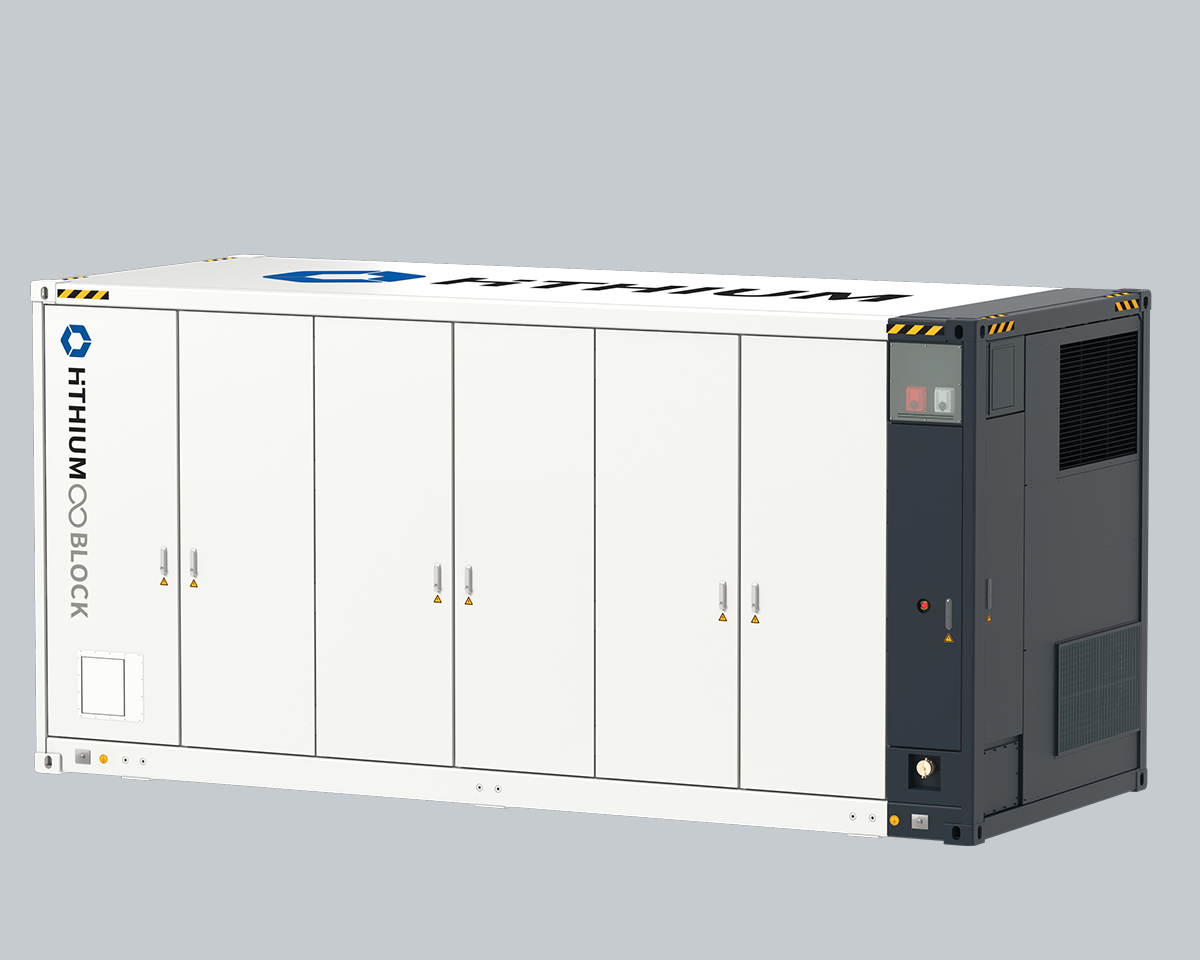
Let me ground this with a scene. February 2021, a 50 MW/200 MWh site outside Duluth. Ambient at minus 18°C. The thermal loop on one string lagged, a glycol pump faulted, and cold-soaked cells stumbled during a fast frequency response event. Six hours down. The operator missed $38,000 in services revenue and nearly breached a performance guarantee. That sight genuinely frustrated me because the issue was avoidable: poor coordination between the BMS and the site EMS, and a heater control deadband that looked fine on paper but not in a blizzard. Look, this part is honestly straightforward—if the BMS, power converters, and SCADA don’t talk with tight timing and real margins, the site will trip when the grid yawns.
Hidden Friction in Today’s “Standard” Designs
I’ve seen four pain points sink margins more than any single hardware flaw. First, interconnection tests demand stiff voltage support, yet many projects treat inverter harmonics like a footnote. Then the lab-to-field gap appears: a clean factory test becomes a messy feeder with backfeed rules. Second, thermal management is tuned for nominal weather, not the 2 a.m. ramp when wind drops. Cells sag, round-trip efficiency drops two points, and operators wonder why regulation bids underperform. Third, warranty thresholds are too tight for real dispatch. A 1C nameplate with a 0.75C “recommended” becomes a silent tax on your revenue stack. Fourth, downtime logistics. A 20-foot, 5 MWh LFP container is easy to ship, but not so easy to service if the door swing hits a trench grate—yes, I’ve had to move a prefab pad in Spokane in March 2023 because of a simple layout miss. Small? Sure. Expensive? Also yes.
What do we fix? Start with control hierarchies. Put edge computing nodes at the string level, not just the container level, so frequency regulation and ramp-rate limits don’t bottleneck through a single EMS loop. Add real meteorological inputs to your dispatch rules, not just ISO signals, and adjust state-of-charge targets when heat load spikes. And specify power converters that pass a 5-minute AGC test with logging at sub-second granularity; if you can’t show that report to an auditor, you don’t have a bankable service. I prefer solutions that prove performance with black-start drills and a measured LVRT ride-through, not glossy plots. — I still remember a Saturday morning in June 2022 when we shaved 12% curtailment at a PV+storage hybrid near Bakersfield just by tightening those loops and bumping the auxiliary cooling schedule by 30 minutes.
Comparative Insight: New Principles That Change the Math
What’s Next
Let’s compare old habits to sturdier principles. Yesterday’s approach chained a single EMS brain to many boxes and hoped the site behaved. The new approach distributes intelligence and sets verifiable guardrails. That means per-string BMS setpoints aligned with temperature and SOC windows, DC-coupled designs that throttle inverter clipping smartly, and firmware that proves inertia-like response for frequency events. When I spec modern utility-scale power solutions, I now ask for two proofs: sub-cycle timestamp sync across devices and a site-level step response to a 10% setpoint change under partial fault. If you don’t test that, you’ll learn it on a windy Sunday at 4 p.m.—and the ISO settlement will teach it back with a bill.
A quick case. Kern County, April 2023. A 100 MW/400 MWh hybrid site with LFP racks (3.2 MWh per rack) moved from centralized control to a layered scheme: fast loops at the string, slower optimization at the plant controller, market bids at the cloud. The change cut AGC tracking error from 7% to 1.9% and bumped qualified capacity by 8 MW in the summer peak window. Firmware also added cell-level thermal derate curves, so the system rode a 43°C heat wave without tripping auxiliary limits. We didn’t add metal; we added discipline. And yes, we used the same cabling and conduit runs—just reassigned priorities in software and audited the SCADA historian for holes. That’s the quiet edge of better utility-scale power solutions: make the site behave predictably, then market revenue gets predictable too.
How to Choose: Three Checks That Don’t Lie
I’ll end with the three checks I use when advising municipal buyers and EPC leads. First, thermal honesty: demand usable energy at 1C across your real temperature band, with a plotted derate curve and measured auxiliary load. Second, grid fitness: require a documented AGC accuracy test, NERC PRC-024 ride-through proof, and harmonic compliance at your substation’s fault level—not a generic factory number. Third, service reality: insist on a 4-hour critical-fault response SLA with spares on site, plus a weekly black-start drill during the first 90 days. If a vendor balks, I walk. That stance has spared me—and my clients—costly lessons since 2010. For a brand that often clears these bars without fanfare, I keep my eye on HiTHIUM.