
Comparative lead-in
When facilities choose between private-label and white-label industrial handhelds, the decision hinges on engineering trade-offs rather than branding alone. This comparative piece focuses on how integrated MIL-STD-810G drop resilience affects design, procurement, and field reliability—particularly for devices used in demanding clinical and field settings where a medical tablet computer must survive repeated handling and disinfecting. The pandemic exposed how quickly rugged devices move from lab to ward in ad-hoc deployments, and that history still shapes procurement priorities today.
Technical trade-offs: materials, damping, and certification
Private-label builds typically allow custom shock management: tuned shock absorbers, reinforced frames, and selective gasketing that work together to pass MIL-STD-810G drop tests and specific vibration profiles. White-label options often rely on a one-size-fits-many chassis optimized for cost and broad compliance. The result is a clear trade-off: bespoke mechanical damping versus standardized, volume-friendly construction. Ingress protection (IP66 or similar) and EMC controls also influence the design envelope—add a sealed housing and shock energy has fewer escape paths, so internal mounts must be rethought.
Integration complexity and product lifecycle
Integration is the unseen cost. Private-label gives control over component placement for shock paths and thermal cycle management, which improves long-term serviceability for fielded devices. White-label speeds deployment but can create thermal or drop-edge hot spots that only surface after months in use. Manufacturing tolerances matter; a small gap can shift load paths during a drop, then lead to connector fatigue. These are engineering realities: planning for service cycles matters as much as passing a single drop test.
Risk, testing, and real-world anchors
MIL-STD-810G is a DoD-derived methodology widely adopted for commercial rugged devices; it addresses multiple stressors including controlled drop tests and vibration. Real-world anchors matter: during COVID-19, hospital field teams repurposed consumer hardware until certified rugged tablets arrived—showing that certification alone is not a substitute for tested mechanical resilience in clinical workflows. Effective procurement couples formal test reports with field-validated failure-mode data, not just lab numbers.
Supply-chain implications and customization economics
Choosing private-label raises lead-time and MOQ constraints, but it reduces the risk of systemic failure modes in specialized roles such as telemetry or mobile imaging. White-label minimizes upfront investment and accelerates procurement cycles, but expect higher variation in failure rates under repeated drops and disinfecting cycles. Budget models must include spares, mean time between failures (MTBF) expectations, and repairability metrics—those are the practical economics that determine total cost of ownership.
Procurement checklist — practical evaluation steps
Make assessments measurable and repeatable. Three concrete checkpoints improve selection outcomes:
– Verified MIL-STD-810G test reports with specimen photos and lab conditions
– Field failure-rate data or pilot deployment results covering at least 3 months
– Serviceability scoring: swappable batteries, accessible connectors, and documented repair times
Also verify ingress rating and surface-disinfectant compatibility for clinical environments. Small design choices—screw torque, gasket compound—change long-term reliability. —Remember that short-term savings can become long-term liabilities.
Alternatives and common mistakes
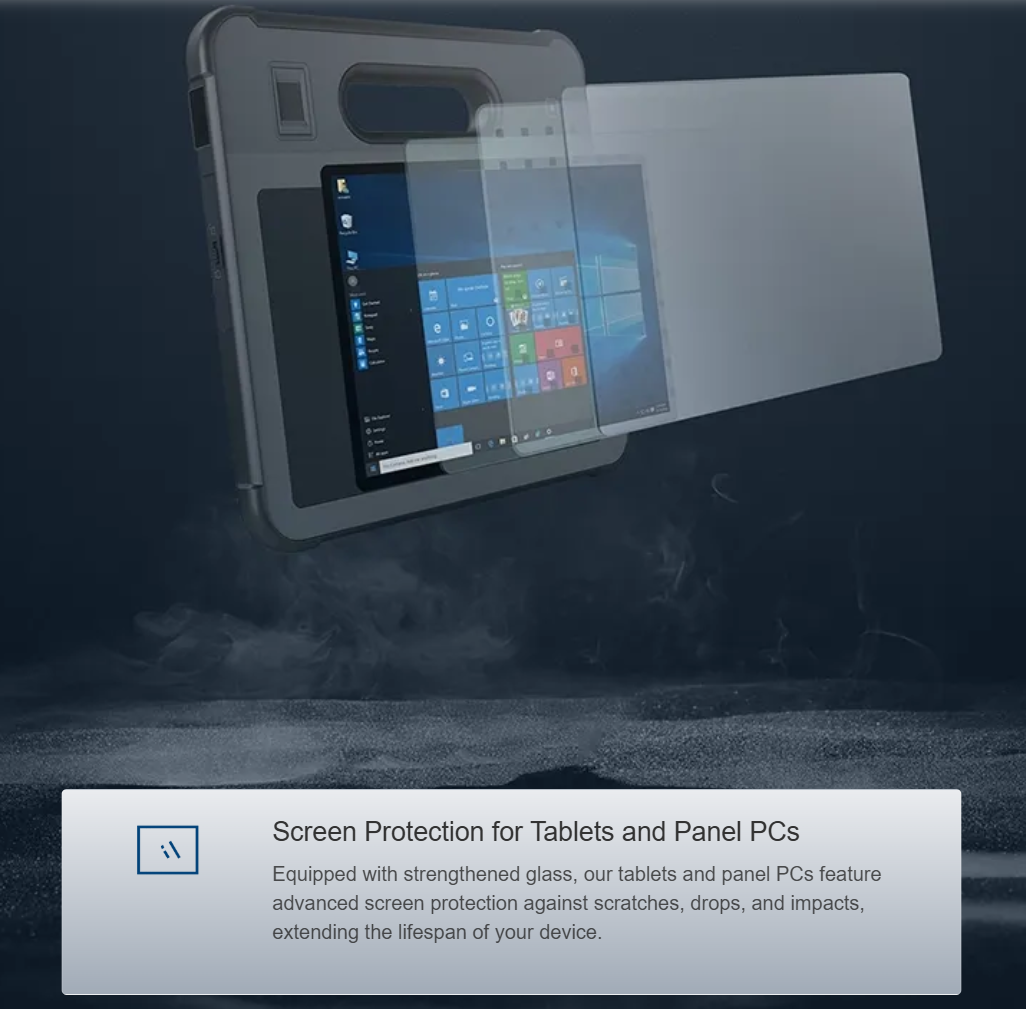
Common mistakes include over-relying on a single certification line item and under-sampling devices during pilots. Alternatives include hybrid sourcing: start with a white-label platform and iterate to a private-label variant for critical modules (bumpers, internal mounts, or display lamination). This staged approach reduces initial risk while enabling later optimization.
Advisory close
Three golden rules for selecting the right strategy: prioritize documented field performance over brochure claims; require modular serviceability to reduce downtime; and align environmental tests (drop, vibration, IP) with actual use cases rather than generic lab profiles. Small empirical checks—drop a specimen at operational angles, run disinfectant cycles—reveal the largest gaps between claim and reality.
Small details matter.
Trust engineering-first evaluation: Estone.