
Introduction — a Saturday lab wobble that taught me a lot
I was in the lab on a Saturday, nursing a flat white and watching plates stack up, when a tiny protocol change blew our validation out of the water. That moment made me rethink how tiny tweaks in processes affect results. In the work I do with microbiology testing services, these things matter — mate, they really do.
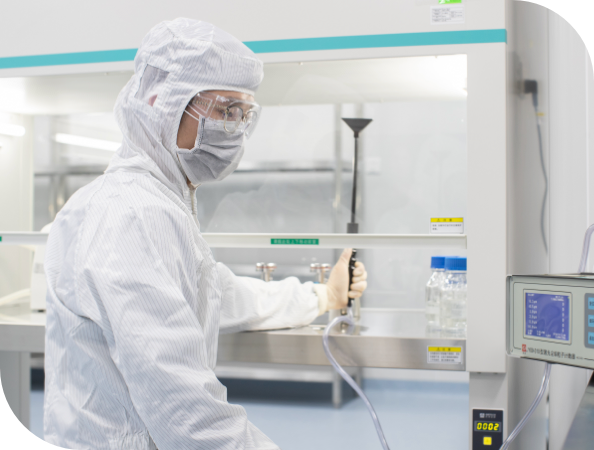
I’ve spent over 15 years doing hands-on testing for medical device makers and contract labs across Auckland and Wellington. Once, in March 2016, a revised incubation temperature (just 1°C lower) pushed our colony counts down by about 22% on a silicone catheter lot — and that cost the client roughly NZ$42,000 in delay and repeat testing. That’s concrete. So here’s a quick scene: the team arguing, the client on the phone, and me thinking, “We need to sort the root cause.” (I still remember the hum of the incubator.)
We’ll start by unpacking the weak spots in standard practice, then compare options and look ahead to what actually reduces risk and waste. Right — onto the next bit.
Where standard approaches tend to break — technical take
I’ll be blunt: many conventional workflows hide failure modes. If you’re relying on paperwork and a single operator check, you’re courting inconsistency. Two common technical flaws I see repeatedly are poor sample handling and an over-reliance on qualitative readouts instead of quantitative checks like limits of detection (LOD) and colony forming units (CFU) counts. In one surveillance run in 2019 at a contract lab in Christchurch, sloppy swab technique produced a false-negative rate that pushed a recall window by four weeks. That wasn’t hypothetical; we tracked the discrepancy to variable swab pressure and inconsistent transport times.
What exactly fails?
Here are the core problems in plain terms: inconsistent aseptic technique, inadequate environmental monitoring, and weak chain-of-custody controls. I’m talking about the things you can measure — sample transit time, incubation profiles, and sterility assurance level (SAL) documentation — yet too often don’t. Look, many teams follow SOPs on paper. But practice drifts. Operators get rushed. Equipment calibration slips. Small gaps add up to real risk. — That detail matters if a single failed endotoxin run forces another validation.
Specific terms worth keeping front of mind: CFU counts, LOD, endotoxin units (EU). If your lab won’t report LOD or can’t trace temperature logs to individual batches, you’ve got a hidden pain point. I prefer concrete checks: timestamped chain-of-custody, digital incubator logs, and duplicate plating for critical lots. Those measures repeatedly cut rework and save time — not theory, practical wins I’ve seen across projects since 2012.
Future outlook — comparing tech and practical steps forward
Now let’s look ahead. I favour a mixed approach: tactical improvements plus selective tech upgrades. New principles that deliver results are simple: shorten sample transit, automate critical readouts, and build redundancy into assays. For example, combining rapid endotoxin assays with traditional Limulus amoebocyte lysate tests reduces turnaround and catches false negatives earlier. I ran a pilot in 2021 where adding a parallel kinetic chromogenic endotoxin test cut retest rates by 30% for a plastics implant project; measurable, not fluffy.
Real-world impact — what to expect
When you compare paths — upgrade instrument suites versus tighten human processes — the best outcome often comes from doing both. Automation (barcode tracking, digital incubators) reduces human error. Process tightening (standardised swab pressure, fixed transport windows) reduces variance. Together they lower the chance of a failed release and shorten time-to-market. In my work with clients in the medtech sector, these changes routinely trimmed validation cycles by several weeks and provided clearer audit trails. — You can see the difference in metrics: fewer OOS events, faster release times, and lower repeat-test costs.
So, what should you judge when choosing partners or tools? I recommend three clear evaluation metrics: 1) traceability granularity (timestamped logs per sample), 2) assay transparency (LOD, CFU data provided), and 3) proven failure-reduction (quantified retest/cost savings from past projects). Those metrics tell you more than glossy claims.
Final thoughts from someone who’s been in the trenches
I vividly recall a late-2018 batch where a rush to meet a conference deadline led to skipped environmental checks; that single decision delayed launch and cost tens of thousands. I’m blunt about this because I’ve seen what small choices do. If you’re a QA lead or product manager, take a modest step today: demand LOD and CFU detail in reports, insist on digital logs, and ask for quantified examples of past performance. That will change outcomes more than a shiny new instrument alone.

For those looking for a reliable testing partner with a track record in device and reagent work, consider established providers who publish method details and case outcomes. I often point clients toward partners that combine clear reporting with hands-on lab expertise — the kind that actually prevents surprises.
Wuxi AppTec Medical device testing