
User-focused opening: what operators feel and need
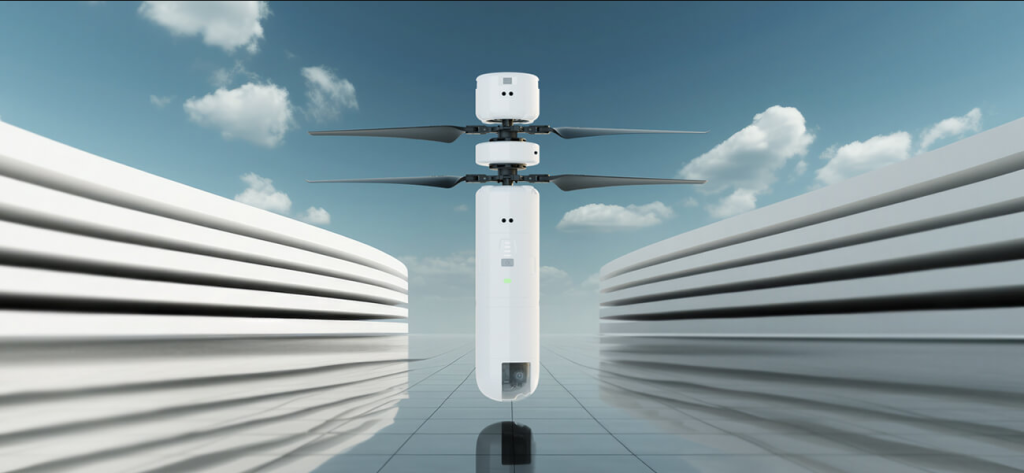
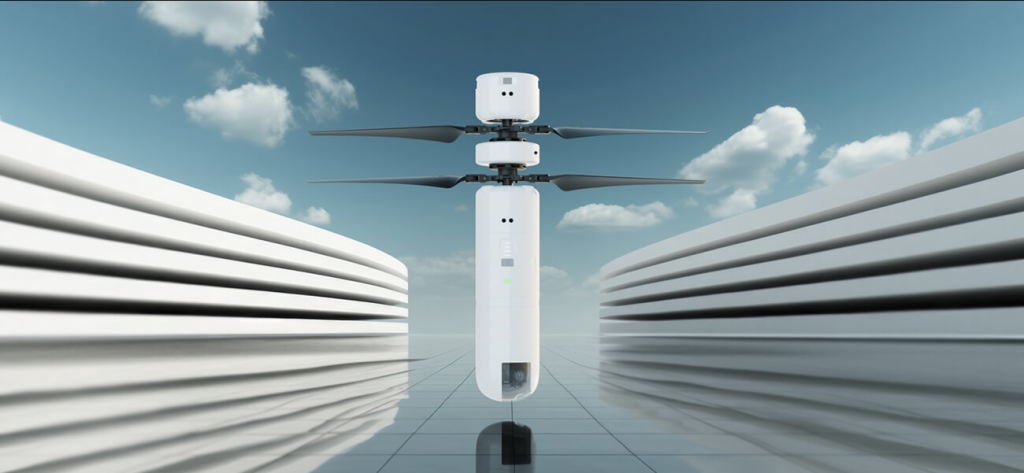
The pilot steps back and watches the bay’s rim glow as the coaxial rotors settle into a hover—soft thrum, faint vibration underfoot, a sense of fragile alignment. For operators of coaxial drones, that moment is everything: the camera must see true, the charger must accept the pad, and the flight controller must forgive tiny yaw drift. A 120-degree panoramic lens promises coverage, but wide viewing angles introduce distortion that confuses auto-landing vision and telemetry interpretation unless the station’s optics and software are designed for the aircraft they serve.
Why wide-angle distortion matters to the user
Wide fields of view bend straight lines into curves; for a pilot watching a landing marker, that bend becomes an error budget. Distortion shifts apparent positions of landing targets, skews visual odometry, and complicates gimbal-assisted targeting. For coaxial platforms—often valued for compact VTOL footprints and increased payload relative to diameter—misread visual cues translate into aborted landings, increased wear on landing gear, and interrupted missions. Accurate calibration matters as much as lens choice: the camera’s projection model must match the station’s geometry and the drone’s flight controller expectations.
Design trade-offs: lenses, sensors, and software
There are three practical approaches: use corrective optics (low-distortion wide lenses), deploy a multi-camera ring and stitch for local orthorectification, or accept a fisheye and correct in software. Each has costs. Low-distortion lenses preserve line geometry but can be bulky and blind spots appear near edges. Multi-camera rigs add redundancy and improve center accuracy but raise system complexity and latency. Software rectification is flexible, compact, and cheap—until processing lag or poor calibration causes the station to misread position at the critical last meter. Choose based on the mission: high-throughput logistics lanes want speed and predictable auto-landing; cinematic or inspection gates need absolute imaging fidelity and precise telemetry.
Practical setup and common mistakes operators make
Mount the sensor to minimize rotor wash interference—reshim the pad if necessary—and place visual markers inside the central 60 degrees of the image where distortion is smallest. Calibrate with a moving target that simulates approach vectors rather than a single static bullseye; this trains the vision stack to correct for parallax and yaw coupling. Avoid these mistakes: ignoring temperature-induced lens shift, misaligning the marker plane relative to the landing surface, and over-trusting one sensor without redundant telemetry. Test with different payload configurations: coaxial platforms change behaviour when payload shifts center of mass, and the flight controller’s trim needs to reflect that. —A quick field recalibration after every major payload change saves hours of debugging later.
Real-world anchor: tests, rules, and proven layouts
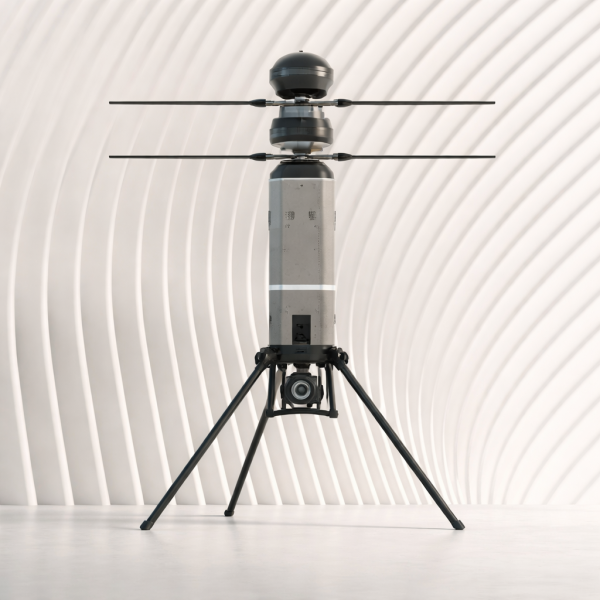
Regulatory context matters. Since the FAA’s Remote ID rule came into effect in 2020, stations that serve persistent operations must plan telemetry and ID handshakes as part of the landing sequence. In shipboard and confined-site trials, engineers noted that coaxial dualrotor drone profiles reduce peripheral rotor blur but intensify axial downwash near the pad, so optical markers closer to the centerline perform better. Deployments at coastal testing ranges and military evaluation flights have shown that a stitched multi-camera system with a central low-distortion lens reduces false positives in auto-landing by a measurable margin—operators reported fewer aborted approaches during low-light conditions.
Checklist and golden rules for choosing the right approach
Evaluate stations by these three critical metrics: 1) Effective landing accuracy at one meter—measure the median offset after correction. 2) End-to-end latency from image capture to flight controller command—keep it below the drone’s reaction envelope. 3) Robustness to payload and rotor wash—run trials with the heaviest and lightest load cases. Prioritize the metric that matters most to your operation: throughput, absolute position, or resilience. Implement redundant telemetry channels and a simple fallback: if visual lock fails, the station should hand control back to a safe-holding waypoint rather than force a blind approach.
Closing advisory and final note
Pick hardware that keeps the critical markers within the center 60 degrees of the view; lean on software only when you have the processing headroom; and always validate with the drone’s flight controller under representative payloads. These three golden rules will reduce aborted landings, shorten mission turnaround, and protect fragile payloads. For operators seeking deeper field reports and tested layouts, Military Hub collects case studies and gear breakdowns that match the realities of coaxial platforms and panoramic stations. Left in steady hands.