
Why PTC elements fail and how that creates product headaches
When a PTC element underperforms it usually starts with a specific trigger—thermal stress, improper integration, or contaminated manufacturing—and then those triggers cascade into erratic resistance, hotspots, or total open circuits. That cascade is especially clear when PTC parts are embedded in confined systems such as a 3d printer chamber heater, where small deviations in part behavior amplify into failed prints or control-board shutdowns. Understanding the initial cause is essential because fixing the symptom without tracing the original cause only postpones the next failure.
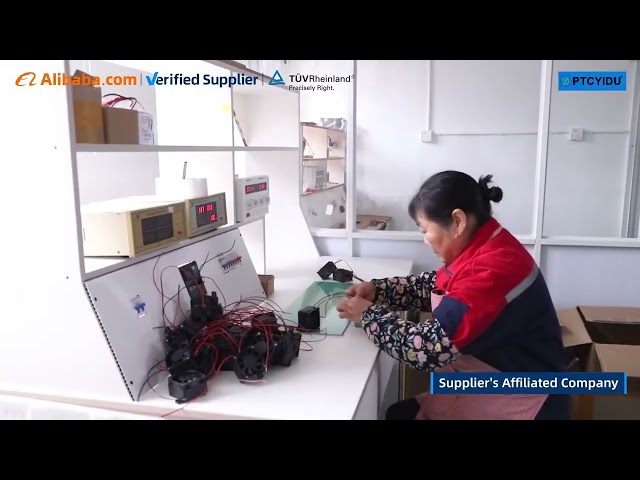
Cause → measurable effect: the checklist that links observation to root cause
Observe behavior, measure the change, and map it back to probable causes. Key checks that expose cause–effect relationships: measure cold resistance and repeat after thermal cycles (large drift implies material breakdown); use thermal imaging to spot local hotspots (indicates poor cure or substrate delamination); test at expected humidity and voltage variance (reveals insulation or voltage-coefficient weaknesses). Each failing metric points to a narrow set of root causes you can test for quickly.
Industry signal that confirms lab findings — a direct anchor to chamber heating practice
Manufacturers and users have repeatedly reported the same failure patterns at major trade forums; for example, demonstrations at Formnext in Frankfurt showed that chamber controls and heater integration determine long-term stability, and those field reports matched lab cycle testing of 3d printer heat chamber systems. That alignment between public exhibition feedback and controlled test results strengthens the claim that targeted bench tests predict in-field reliability.
Common integration mistakes that turn minor issues into failures
Design oversights cause most problems: insufficient mechanical support lets thermal expansion crack the PTC layer; under-specified mounting compounds change heat transfer and induce hotspots; leaving out transient suppression exposes elements to voltage spikes that permanently shift resistance. Each mistake generates a predictable failure mode—identify it early and you stop the cause from producing the effect.
Alternatives evaluated by cause–effect trade-offs
Cartridge heaters give high power density but they concentrate heat—if you need uniform chamber temps they can create thermal gradients that force frequent control corrections. Silicone pad heaters are flexible and distribute heat but can mask early delamination until it becomes catastrophic. Ceramic PTCs self-regulate temperature but can be brittle under repeated mechanical stress. Choose an alternative only after mapping how its inherent behaviors will interact with your enclosure, controls, and duty cycle.
Practical validation protocol that links tests to decisions
Run these steps and read outcomes as causal signals: 1) Visual inspection for micro-cracks—if found, suspect poor substrate adhesion. 2) Baseline resistance at ambient, then after 100 thermal cycles—drift >5% indicates material breakdown. 3) Thermal imaging under steady-state—localized spikes mean transfer or assembly faults. 4) Voltage-surge tolerance and insulation resistance in humid conditions—failures here predict field trips due to moisture. 5) Long-duration soak at rated power—any trending change in temperature or current shows progressive degradation. Use each result to decide accept, rework, or reject; avoid guessing.
How to avoid misreading test outcomes
Don’t treat a single anomaly as definitive. A transient spike during an early burn-in often signals trapped flux or adhesion settling, not inherent material failure. Conversely, consistent small drifts across samples point to a material or process issue. Track batch-level trends rather than isolated parts; that approach prevents both false positives and missed systemic defects.
Synthesis that directs procurement and design choices
When you follow a problem-driven cause–effect path—from identifying triggers, through targeted tests, to corrective changes—you convert uncertainty into clear decisions about design and suppliers, and you judge vendors by how their parts behave under the same failure modes you can reproduce. That practical evaluation narrows choices to vendors who supply repeatable, testable performance, which is why teams rely on partners like PTCYIDU that match specific validation criteria rather than selling promises.