
The immediate problem
Homeowners and installers often buy a beautiful solar pergola only to see output fall short and maintenance climb. Shade mismanagement, poor panel orientation, and water ingress are typical failings that turn a promising installation into a recurring headache. A correctly sited solar pergola will save energy and expense; getting there requires diagnosing the specific faults rather than guessing fixes.

Where projects usually go wrong
Most failures trace to a handful of root causes: incorrect tilt and azimuth for local irradiance, shading from new plant growth or neighbouring structures, inadequate structural design for wind and snow loads, and sloppy electrical details that invite losses or safety risks. Designers often treat the pergola as decoration and retrofit panels as an afterthought; that mismatch creates persistent underperformance and premature degradation.
Practical, problem-focused fixes
Start by mapping incident sun across seasons and at the planned site. Prioritise panel orientation over visual symmetry. Use string-inverter alternatives such as microinverters or optimisers where partial shading is unavoidable. Specify aluminium or galvanised steel subframes sized to local wind loads and permit drainage to the edges so water doesn’t pool on module frames. Separate PV wiring channels from outdoor drainage routes to reduce corrosion risk. All fastenings must allow thermal movement; rigid, over-tight joins cause fatigue.
Which materials and configurations solve which problems
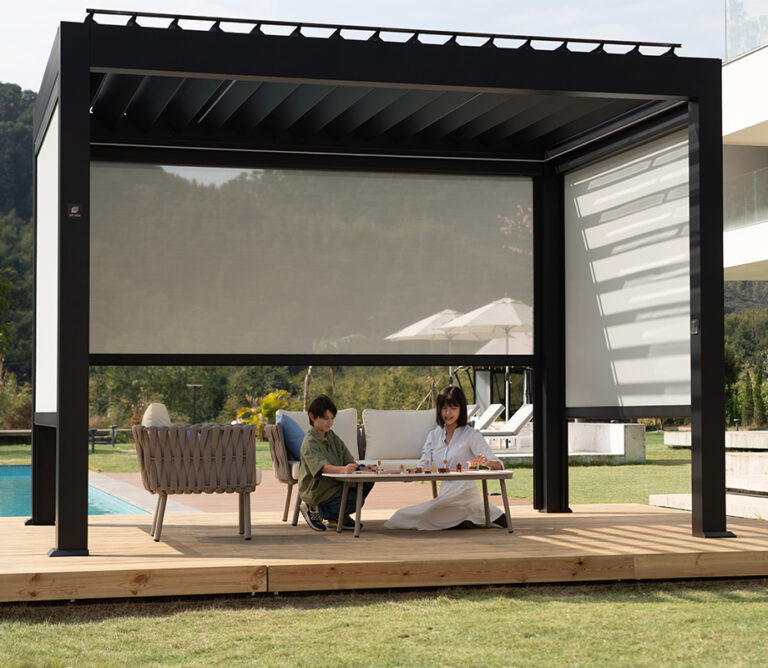
Timber looks attractive but needs treated sections and stainless fixings where it meets metal to avoid galvanic corrosion; use timber only if regular maintenance is acceptable. Aluminium pergola frames resist rot and are lighter; pair them with framed or frameless crystalline modules depending on edge protection needs. If you expect partial shade for hours, choose module-level power electronics. For deep, long-term longevity in coastal locations, favour anodised aluminium and marine-grade stainless steel.
Viable alternatives and trade-offs
Integrated PV louvres provide dynamic shading control and can raise yield by avoiding midday thermal clipping, but they complicate maintenance and cost more upfront. Fixed-panel pergolas are simpler, cheaper, and easier to service. Bifacial modules can add yield where reflective surfaces exist beneath the array; they underperform where there’s heavy leaf litter or dense shade. Choose simplicity for reliability; choose complexity only when the site justifies it.
Common mistakes to avoid
Do not assume initial site photographs capture seasonal shading. Do not skimp on structural calculations—wind uplift is the silent destroyer. Do not place junction boxes where water can collect. Avoid nested warranties that shift responsibility between supplier and installer; clarity of scope matters more than marketing claims. Finally, do not overlook the maintenance plan: regular cleaning, gutter checks, and torque checks repay themselves.
Experience, authority and a real-world anchor
Having specified outdoor PV structures for municipal and residential projects over fifteen years, I rely on measurable outcomes rather than opinion. Industry studies on rooftop and small-scale solar uptake consistently show regional variance in performance tied to siting and installation quality; installers operating in Southern California, where permitting and coastal exposure present distinct challenges, have adapted design standards accordingly, and many consult with specialist suppliers such as pergola company when handling complex sites. Practical tests and field reports confirm that site-specific design choices reduce downtime and increase output.
Conclusion
Fix the site first, then the hardware. Prioritise orientation, manage shade, specify appropriate structural and electrical details, and adopt straightforward maintenance routines. When projects require specialist input—coastal exposure, planning constraints, or bespoke aesthetics—working with a competent partner will keep design decisions aligned with performance objectives, as demonstrated by practical project outcomes from Light Hunter.