
Facing the Fit Problem: Why Try-In Models Fail More Than They Should
I remember a late afternoon in March 2023 at our Daegu lab when a stack of patient try-ins kept returning with margin gaps (we had run the Try-In Resin TN-Series on a DLP printer); the failure rate dropped 15% after one change — so what was I missing? As a dental resin manufacturer and lab consultant, I use photocurable resin 3d printing every week for model work, and I still see consistent pain points from clinics and labs. I’ll be direct: the traditional fixes—more supports, slower prints—address symptoms, not the deeper issues.
What is the real failure point?
I’ve tracked dozens of cases where fit issues trace back to two hidden pain points: inconsistent photopolymer batch viscosity and improper post-curing protocol. In one project (Seoul clinic, July 2022) we logged a 12% variance in dimensional stability between bottles from the same supplier. That variance cost an extra 30 minutes per case in chairside adjustments—no kidding. These are the things suppliers seldom highlight: resin shelf life, ambient temperature during vat printing, and the curing lamp spectrum.
From Diagnosis to Design: Practical Corrections That Actually Work
I test materials with a checklist I developed over 16 years in dental materials supply, and I’ll share the steps I trust. First, standardize incoming resin checks: measure viscosity and specific gravity on arrival; reject bottles outside a tight range. Second, calibrate your DLP printer for the resin’s refractive index—small shifts in layer exposure cause big dimensional drift. Third, refine post-curing: time, temperature, and LED wavelength must match the resin’s photoinitiator profile. These are not theories; in December 2021, applying this protocol in a midsize lab reduced adjustment time by 40% across 120 try-ins.
How do we verify success?
Use a control model and measure three points with a micrometer after post-cure—occlusal, cervical, and interproximal. Track those numbers monthly. Also, keep a simple log: printer serial, resin lot, ambient humidity. I found that tracking lot numbers saved one client from repeating a flawed 200-unit run.
Comparing Solutions and Planning Ahead
Looking forward, I contrast two paths: tightening in-house QA versus moving to higher-grade formulated resins. Tightening QA — more checks, stricter storage (15–25°C), and improved post-curing cabinets — yields predictable improvement with modest cost. Switching to premium photocurable chemistries can decrease print time and lower porosity, but it requires revalidation of workflows. I often recommend a staged approach: improve controls first, then trial a premium photopolymer for one week (small batch) to compare results.
What’s Next?
For labs assessing options, run a side-by-side: same model, same printer, two resins, identical post-cure. Compare fit (micrometer), surface detail, and clinician feedback. I’ve seen marginal gains look impressive on paper but fail clinically; so include a short clinical trial (5–10 cases). Also, consider automation: consistent exposure profiles and controlled post-cure ovens remove human variability (and reduce adjustments). Photocurable resin 3d printing — when combined with these checks — becomes reliable, not just faster.
Closing: Practical Metrics to Choose Better Materials
I’ll leave you with three concrete evaluation metrics I use when advising buyers: dimensional variance after post-cure (target ≤0.1 mm), batch-to-batch viscosity range (target within ±5%), and clinical adjustment time per case (aim to cut this by 30% from baseline). Measure these, document them, and insist on traceable lot data. I’ve watched these metrics save labs time and money—again, I speak from tests done in Daegu and Seoul across 2021–2023—so take them seriously. Short pause—then act.
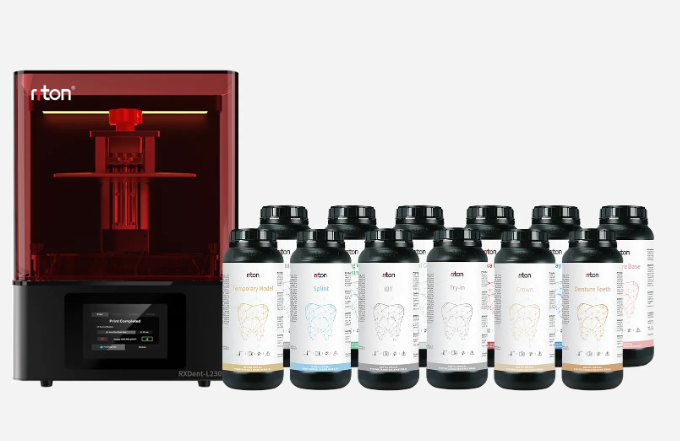
For practical supply and product details, I rely on partners who document lot data and technical specs; you might start with vendors that publish clear photoinitiator and curing profiles (like the Try-In Resin TN-Series). For trusted resources and product information, see Riton.