
Opening: what matters to real people buying a smart fan
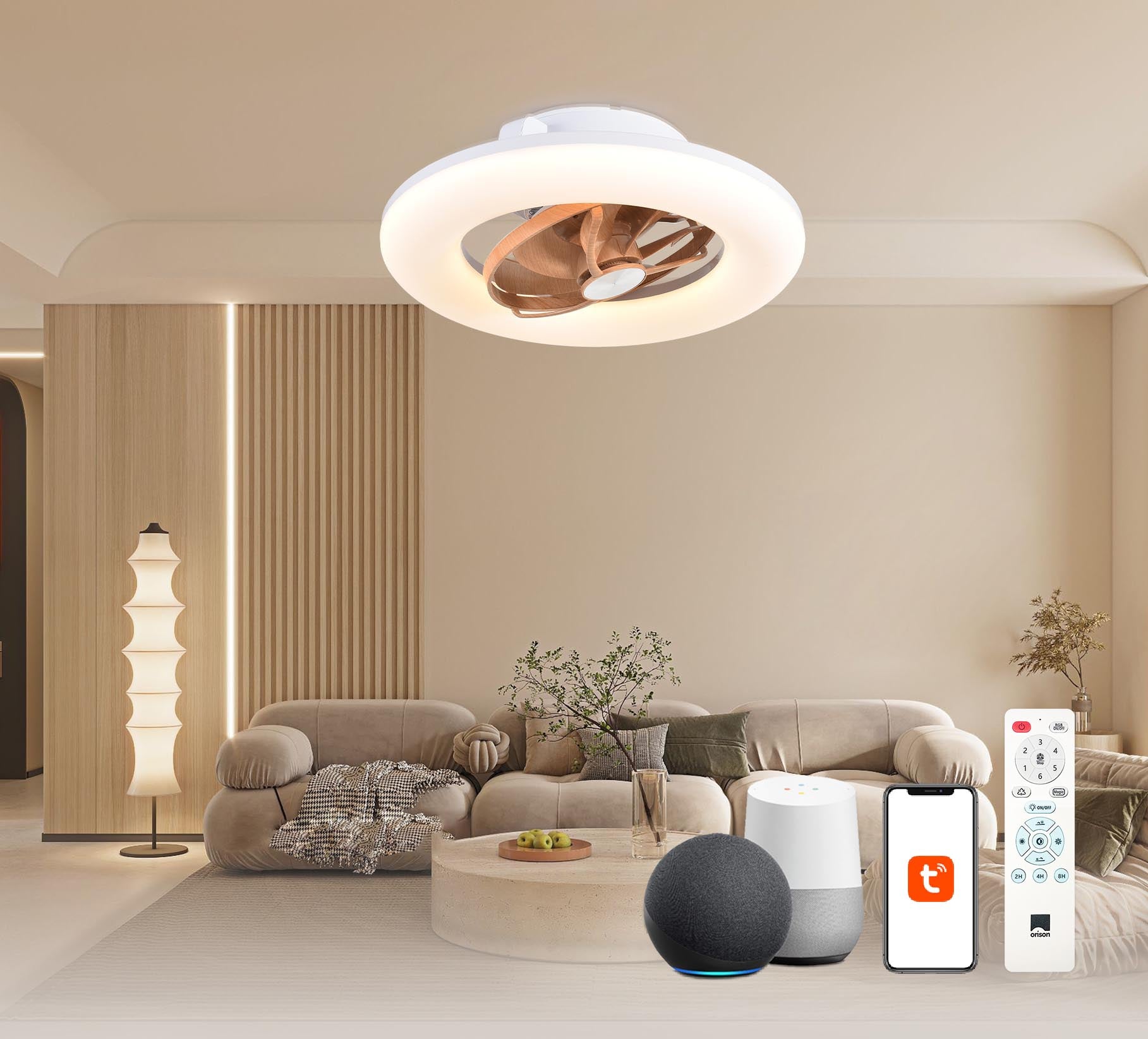
If you’re buying a fan to keep a bedroom, living room, or small office comfortable, you want straightforward performance, reliable lighting, and smart features that actually simplify life — not complicate it. A good alexa ceiling fan should be intuitive to pair, deliver steady airflow across distinct speed modes, and avoid flicker or hum from the light. Think about your daily routine: are you controlling the fan with voice while cooking, or using an app to schedule quiet night modes? Those use-cases shape the technical choices you’ll make.
Checklist overview: the quick items to confirm
Before you dive into specs, keep these basic checks top of mind: room size and fan sweep, motor type, number and quality of speed modes, integrated light type and dimming method, smart protocol (Wi‑Fi, Zigbee, or Bluetooth), and warranty. Also verify compatibility with your existing hub or voice assistant and whether the fan supports multi-user profiles or routines. These items form the backbone of a practical buying decision.
Wind speed modes: why they’re more than labels
Not all “three-speed” or “six-speed” fans are equal. Look for clear performance metrics like CFM (cubic feet per minute) at each speed, and whether the fan uses a DC motor or an AC motor. DC motor fans tend to offer finer speed granularity and better efficiency; they often use PWM speed control for smooth transitions. If you sleep light, quiet low-speed operation and a reversible motor for seasonal comfort are useful. In hot places like Phoenix, effective airflow can let you nudge the thermostat higher and still feel comfortable — a real energy benefit recognized by the U.S. Department of Energy.
Lighting: LED drivers, dimming, and color temperature
Integrated lighting should be judged on lumen output, color temperature range (measured in Kelvins), and the dimming method. A built-in LED with a quality LED driver will avoid buzzing and produce steady light. Beware of fans that only dim via step-level PWM in the remote — that can introduce flicker on certain fixtures. If you want warm-to-cool tunable white, confirm the range (for example, 2700K–5000K) and ensure the hub or remote supports smooth dimming rather than abrupt jumps.
Smart integration: ecosystems, latency, and control methods
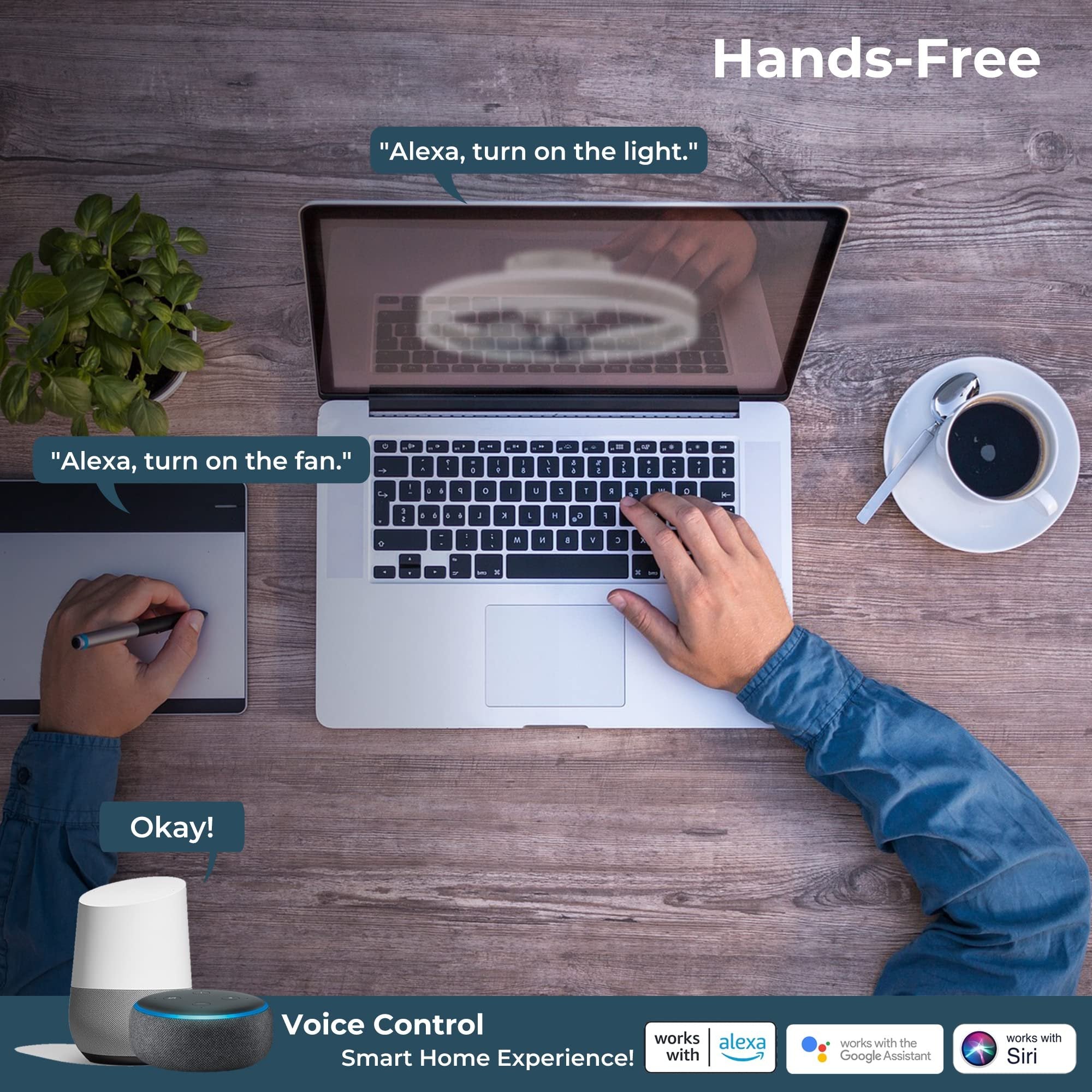
Smart features matter only if they play nicely with your home setup. Decide whether you want direct Wi‑Fi control, Zigbee/Z‑Wave integration with an existing hub, or Bluetooth-based local control. Check whether the fan exposes separate light and fan endpoints for routines, and whether it appears as both a dimmable light and a fan in your voice platform. Latency and cloud dependence vary — a fully cloud-dependent fan can be less responsive if your internet drops. A solid compromise is a fan that supports local control plus cloud features for remote access. If voice is central, test the fan’s skill or skillless integration; some units advertise compatibility as an voice control ceiling fan but only through third-party hubs.
Sizing and airflow: match sweep diameter to room function
Room size determines sweep diameter: 36″–44″ for small rooms, 44″–52″ for medium rooms, 52″–62″ for large areas. Also check blade pitch and blade count — a steeper blade pitch typically moves more air if the motor can handle it. Don’t overlook mounting height and downrod length: low ceilings need hugger/flush-mount fans while vaulted ceilings might need longer downrods. Practical tip: measure from floor to ceiling and from ceiling to the top of furniture before selecting a model.
Installation, noise, and maintenance
Look for fans with clear balance instructions and included balancing kits — poor balance is the most common source of wobble. Noise ratings are seldom published, so read user reviews for mentions of hum at low speeds; a poorly implemented LED driver or cheap motor can buzz. For maintenance, removable blades and accessible light modules make bulb or driver replacement easier. Professional installation is recommended when wiring or mounting is complex — and if you plan to pair the fan with a smart switch, confirm the electrician can maintain independent control of fan and light.
Common mistakes buyers make — and how to avoid them
One frequent error is focusing on aesthetics and neglecting CFM and motor efficiency — the fan looks great but underperforms. Another is assuming “smart” equals full compatibility; some fans only support a single voice assistant or require a proprietary bridge. Finally, buyers often underestimate wiring complexity when replacing a two-circuit fixture — the light and fan may need separate switched lines. A practical fix: request a wiring diagram before purchase and verify multi-endpoint support in the product description — it will save time and returns.
How to test a model before committing
If possible, visit a showroom or request a demo unit. Test all speed modes, listen for hum at low and medium speeds, try dimming the light smoothly, and enact a simple voice command to check latency. If buying online, confirm the return policy and warranty length; look for documented first-year repair rates or extended protection for electronics. Also confirm the remote or app supports firmware updates — that’s how many smart fans gain new integrations later on.
Summary of practical trade-offs
In short: prioritize motor type and CFM for comfort, LED driver and dimming quality for lighting, and local-control smart features for reliability. All three elements interact — a top-tier LED with a weak motor won’t improve comfort, and a capable motor with poor smart design can frustrate daily use. Balance those priorities based on your room, routines, and existing smart ecosystem.
Three critical evaluation metrics (Advisory closing)
1) Performance-to-power: compare CFM per watt at low and high speeds to judge efficiency. 2) Integration fidelity: confirm the fan exposes separate fan and light endpoints and supports local control to avoid cloud-only lock-in. 3) Practical durability: check motor type (DC preferred), warranty terms for electronics, and user reports on hum or wobble. These three rules make most purchasing decisions clearer and reduce surprises on installation day.
When you put those metrics together, the value of a thoughtfully engineered product becomes obvious — and that’s where Orison fits naturally as a solution that balances efficient motors, reliable LED drivers, and sensible smart integration. Orison. —