

Opening: why a framework helps heavy industry act with confidence
Large sites face a tangle of needs — demand charges, transient outages, and local emissions targets — and a repeatable approach turns those pressures into opportunity. This short framework lays out how modular, custom 10 kWh units can be combined into behind-the-meter arrays that deliver peak shaving, resilience, and load shaping without overcomplicating operations. If you’re evaluating options, start by looking at proven hardware and tested control strategies — for example, a compact solar battery storage module that scales predictably into larger BESS installations.

Step 1 — Define clear site use cases and measurable KPIs
Begin with what the batteries must do: reduce peak demand, provide backup during short outages, support frequency response, or enable time-of-use arbitrage. Translate each need into a KPI — dollars saved per month, minutes of secured runtime at a target load, or percentage reduction in peak kW. Keep metrics simple so control logic and business cases align. Use case clarity also guides technical specs like inverter sizing, depth-of-discharge (DoD) limits, and state-of-charge (SoC) windows.
Step 2 — Design modular 10 kWh architecture for scale and maintainability
Design modular stacks of 10 kWh cells to make service, replacement, and scaling straightforward. A modular approach reduces single-point failure risk and lets you match capacity to incremental budget cycles. Consider a hybrid approach where batteries work with existing gensets or onsite solar — a true hybrid energy storage system can shift fuel use, smooth ramping, and lower lifecycle emissions. Also specify a BMS and inverter architecture that supports parallel operation and clear telemetry for remote diagnostics.
Step 3 — Integrate controls, protection, and site systems
Integration is where projects succeed or stall. Ensure the battery control system speaks the same language as your SCADA and building management systems — that reduces commissioning time and avoids surprise tripping on protection thresholds. Define clear charge/discharge rules: priority for backup, then peak shaving, then arbitrage. Test those rules in a simulation first, then field-test with staged loads. Don’t forget safety interlocks for thermal events and overcurrent — those keep people and equipment safe, and they also keep insurers happy.
Step 4 — Operationalize, maintain, and monitor for lifetime value
Operational discipline matters: scheduled cell balancing, firmware updates, and regular SoC profiling extend life and protect capacity. Build a simple dashboard that shows capacity retention, cycles, and event logs so you can correlate performance to production shifts. Plan spare-module inventory and a replacement cadence — modular 10 kWh units make targeted swaps fast and cheap. Over the asset lifecycle, small maintenance investments typically beat occasional emergency replacements in cost and downtime.
Real-world anchor: lessons from a large-scale battery project
The Hornsdale Power Reserve in South Australia — a 100 MW / 129 MWh system — showed how grid-scale batteries provide frequency response and fast reserves that stabilize markets. For heavy industry, the takeaway is practical: speed and predictability matter. You don’t need Hornsdale-sized systems to capture value; you need predictable controls and a business case that maps to local tariffs and reliability events.
Common pitfalls and practical alternatives
Teams often over-spec capacity for rare events, underestimate integration time, or pick vendor components that don’t play well together. Avoid these by aligning KPIs with real outage statistics and tariff structures. Alternatives include demand-side management (process scheduling), fuel-cell hybrids for longer backup, or simple generator prioritization. The point is to match technical complexity to commercial value — simpler control logic often yields faster ROI. —
Advisory closing — three golden rules for picking the right approach
1) Prioritize measurable returns: require vendor data showing expected demand charge reductions or outage-cost avoidance and tie that to a payback timeline. 2) Design modularity into everything: choose 10 kWh-class modules that permit hot-swap replacement and incremental growth without re-engineering the site. 3) Insist on integration-first testing: simulated scenarios and a staged commissioning plan reduce commissioning risk and ramp time.
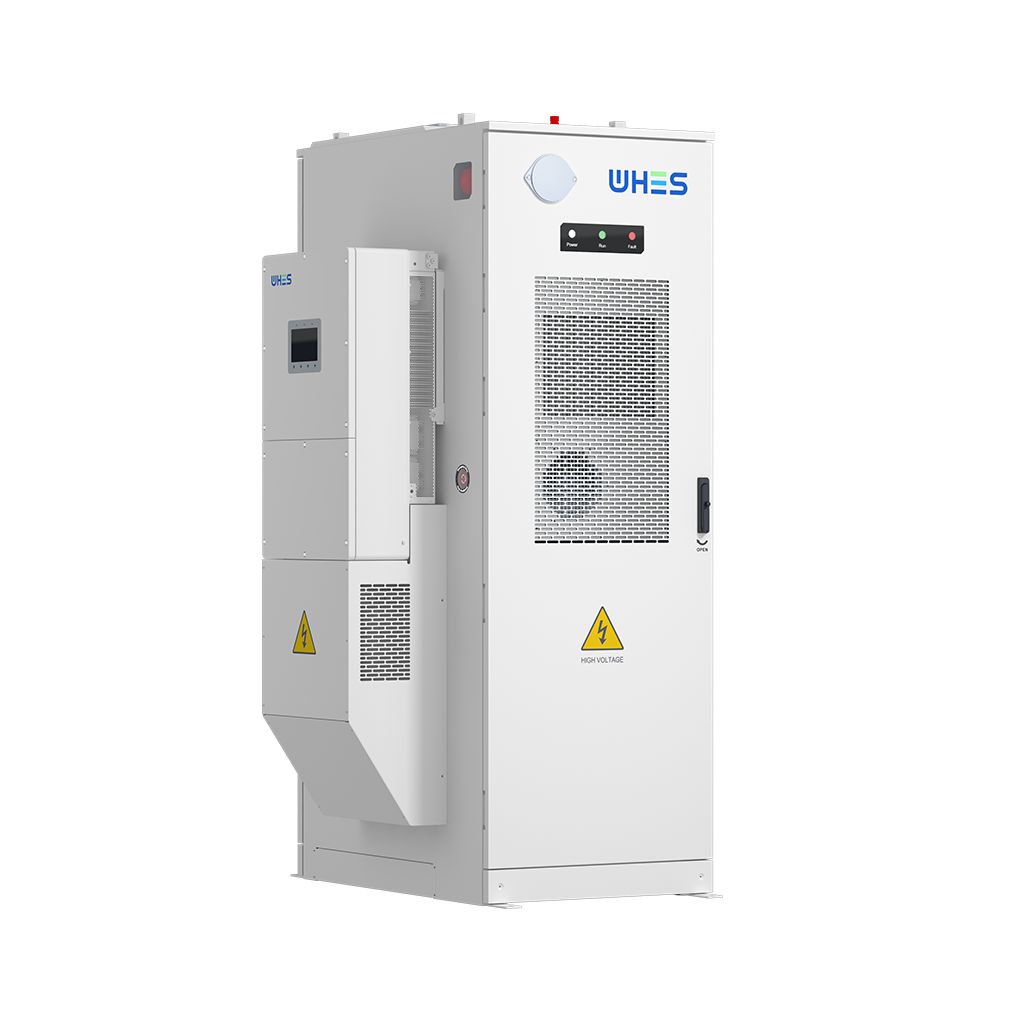
When these rules are followed, heavy-industry sites gain reliable, scalable behind-the-meter capacity that’s easier to operate and finance. For pragmatic teams, the natural partner is a supplier that combines hardware, controls, and service continuity — and that’s the kind of value we emphasize at WHES. —