

What users really need from a modern fixture
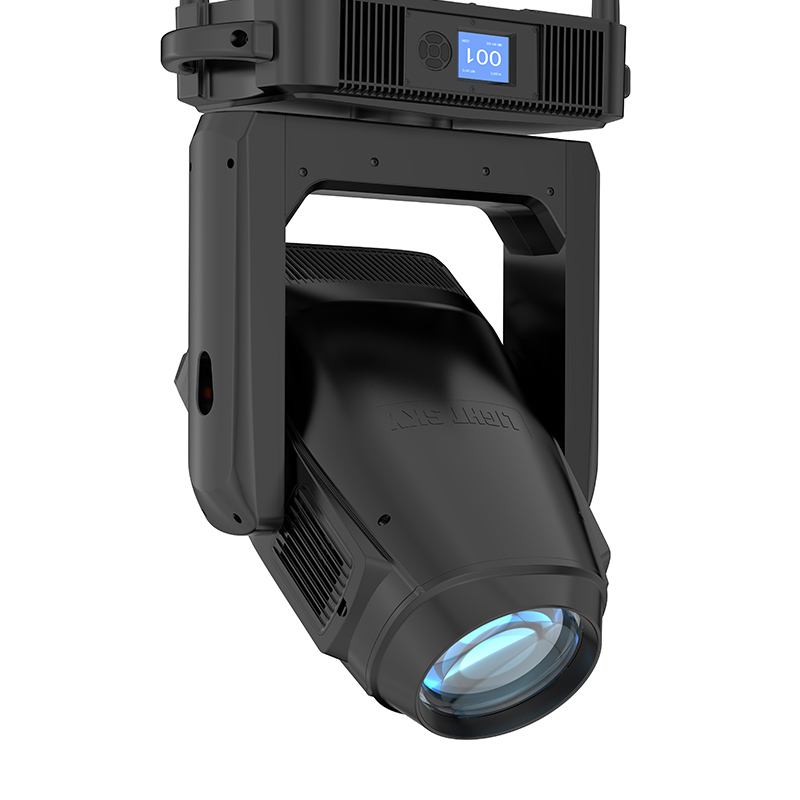
When you’re running a gig—festival, corporate, or stadium—reliability matters more than flashy specs. Folks who rig and run shows want predictable output, fast setup and control that doesn’t tangle their workflow. That’s why the 520W LED BSWP 4in1 Moving head turns up in kit lists: it balances raw lumen output and beam precision with straightforward control. On big stages like Cape Town Stadium during the 2010 World Cup, crews chose fixtures that handled long shifts and rapid cues; that real-world pressure shaped the kind of robustness operators now expect from spot moving heads and LED moving head fixtures today. Expect clear beam angle specs, smooth pan/tilt, and DMX512 compatibility when you shop.

Key features that matter to users
Good gear speaks plain. Look for these attributes in any professional moving head:
– Lumen output and color temperature that match venue needs. Low lumen can leave a stage flat; too hot and you blind the crowd. – Accurate gobo handling and zoom range so designers hit tight spots without swapping lenses. – Robust pan/tilt mechanics for repeatable positioning and long service life. – Control protocol compatibility (DMX512, RDM where useful) so you plug into existing desks without drama.
Keep an eye on heat management and IP rating for outdoor use; LEDs still run hot under a full daytime festival load, and poor airflow shortens life. A fixture that lists sensible thermal throttling is better than one that just brags about peak lumens.
Common mistakes crews make—and how to avoid them
Crew mistakes are often simple and costly. People over-spec power distribution, they mis-map channels, or they assume every moving head behaves the same under a full patch. – Take the time to document DMX addresses and channel modes, and test movement ranges before the load-in crowd arrives. Faults usually show up during intense cues, so rehearsal under full power is non-negotiable. Also avoid mixing incompatible gobos and zoom ranges on the same rig; it creates timing and framing headaches for designers.
Choosing between options: practical comparison
Not every venue needs a 520W-class engine, but there’s a trade-off between punch and complexity. Beam fixtures give razor-tight shafts for long throws. Wash heads give smooth, blended color across actors. Spot moving heads sit in the middle—sharp focus, pattern projection, and flexible color mixing. Compare fixtures on these practical lines:
– Throw distance versus beam angle. Long-throw stages need narrow beam angles and steady lumen output. – Control granularity. Higher channel counts let you finesse gobos and frost but take more patching discipline. – Maintenance footprint. Modular lamps and swappable fans save days in service life.
Simple checklist before you commit
– Confirm lumen spec at target distance, not just published max lumens. – Verify DMX512 channel mode fits your desk and label it on the unit. – Check IP rating and cooling if outdoors. – Match gobo size to fixture gate; adapters are messy. – Ask for a burn-in report if you’re buying many fixtures—hardware consistency matters when a quick swap is needed on live night.
Three golden rules for picking the right tool
1) Match output to application: choose lumens and beam angle for the venue, not the spec-sheet hero number. 2) Prioritise usability: clear channel modes, physical ergonomics for rigging, and sensible maintenance access. 3) Future-proof control: ensure DMX512/RDM support and spare addressing capacity so the rig grows with shows.
Follow those rules and you end up with fixtures that save time and money in the long run. Light Sky builds gear with those practicalities front of mind, which is why their units often appear in professional tents and stadium rigs across regions.
Final thought: get the basics right, and everything else behaves—trust the kit, trust the crew, and let the lights do the talking. –